Automated Competitor Pricing Monitoring at Scale
How to build a pricing pipeline that actually survives at scale.
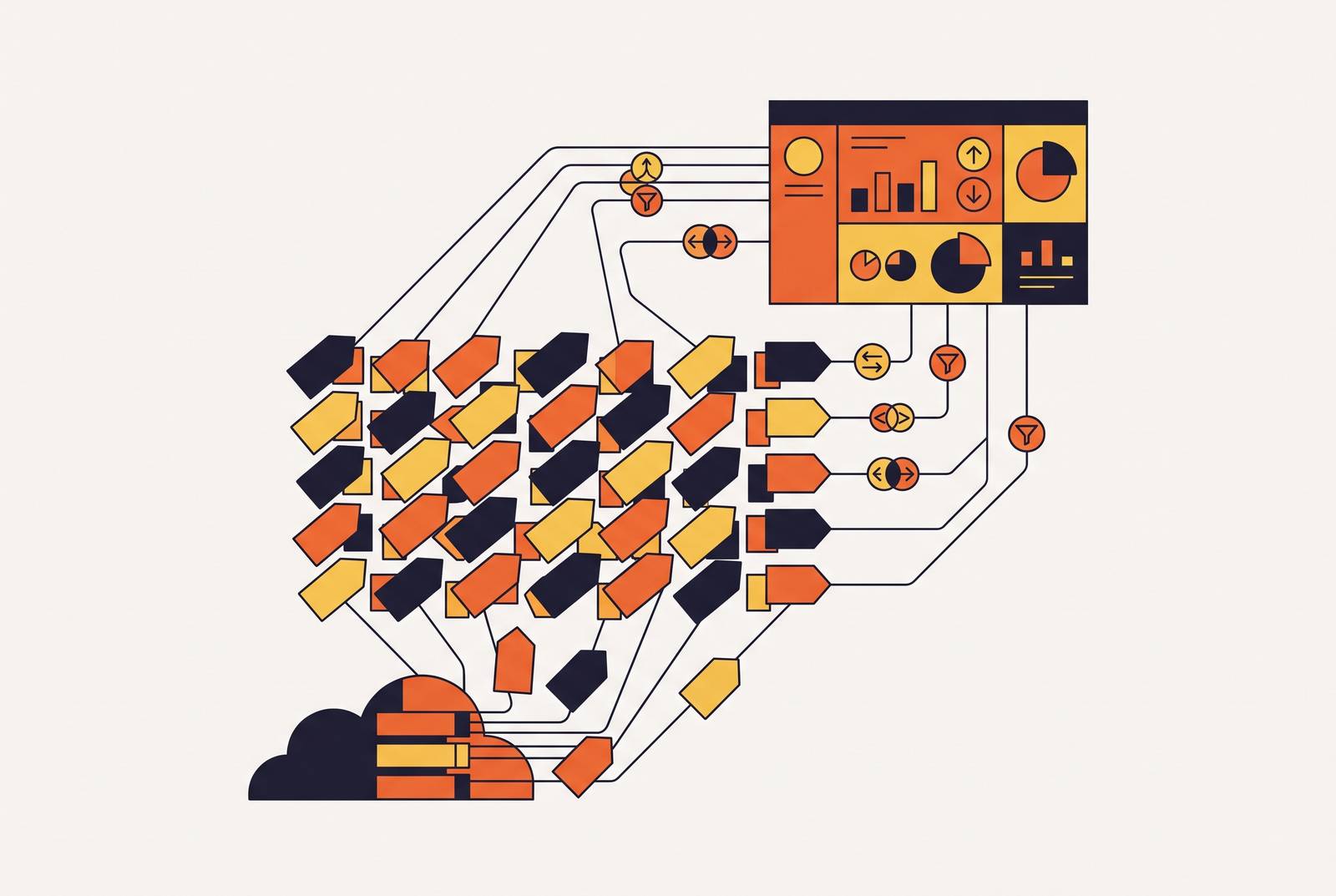
Prices move faster than humans can watch them, and that's the whole story here. Automated competitor pricing monitoring at scale isn't a data science problem, it's a plumbing problem: you need a pipeline that pulls in structured pricing data around the clock, without falling over the moment volume spikes or a retailer's anti-bot system decides you look suspicious.
Shoppers already do the comparison work for you, whether you're watching or not. A 2026 YouGov study across 17 markets found roughly two-thirds of consumers check prices online before buying, in-store or online, so your prices get held up against a competitor's whether you're paying attention or not. Meanwhile, the pace has gotten absurd on the seller side too: Amazon adjusts prices at a pace that can reach multiple times per hour, and plenty of retailers now live in markets where prices shift daily or hourly. Software vendors noticed. The dynamic pricing software market sat around $3.49 billion in 2025 and is projected to hit about $4 billion in 2026, according to The Business Research Company's market report on the category.
A repricing engine, no matter how clever, is only as smart as the competitor feed it's reading from. Garbage in, garbage priced. And the industry data backs this up. Retail scraping adoption data from Actowiz Solutions shows 81% of retailers in a major national market now use automated price scraping for dynamic repricing, up from just 34% in 2020. That's a six-year gap closing fast, and it means teams still relying on manual price checks or spreadsheets aren't behind on strategy. They're behind on infrastructure, which is a much more expensive thing to fix later.
Before getting into how the pipeline works, monitoring itself needs settling, because it's grown well past checking whether a product's price changed.
What a modern pricing intelligence pipeline needs to collect
Watching a price tag isn't enough anymore. Serious ecommerce operations track marketplace listings, retailer websites, promo codes, stock levels, star ratings, and shipping fees, because all of those things factor into whether a shopper clicks "buy" on you or the guy next door.
A full competitive pricing setup really runs on three connected layers. First, continuous monitoring, which is the actual collection work. Second, product matching, which means figuring out that "Widget Pro 3000" on your site is the same item as "WidgetPro-3K (2024 model)" on a competitor's. Third, a pricing engine that takes that matched, cleaned-up data and turns it into a recommendation or an automatic price adjustment.
Product matching deserves its own spotlight, honestly, because it's where most of the pain lives. The same product shows up under different names, different model numbers, wrapped into different bundles, or renamed slightly for a new model year. If your system can't tie all those variations back to one SKU in your own catalog, your pricing engine is comparing apples to some vague fruit-shaped object.
Scale makes this worse fast. PageCrawl's guide shows tracking just 200 products across 15 competitors requires at least 3,000 individual monitors, and that's before adding different countries or currencies into the mix.
Freshness needs also shift depending on what decision the data feeds. A flash sale or a MAP violation needs sub-hour detection, because by the time you notice tomorrow, the damage is done. A strategic pricing review might be fine with a daily snapshot. Trend analysis, on the other hand, wants weeks or months of historical charting, not a single point-in-time read.
Explainability isn't optional anymore. Pricing teams increasingly want to see why an algorithm moved a price, not just get a notification that it did. A black box that occasionally changes numbers isn't a trust-building experience for a pricing director who has to explain the number to their boss.
Knowing what to collect is step one. Actually collecting it, reliably, at scale, without the pipeline quietly lying to you, is a different animal entirely.
How price scraping pipelines work, and where they break
The basic mechanic is simple enough to explain to your grandmother: send automated requests to a product page, pull the price and other fields out of the HTML, store it somewhere structured. The complications start almost immediately after that sentence ends.
The first fork in the road is static pages versus JavaScript-rendered ones. A lot of modern storefronts don't put the price in the HTML at all. Instead, the page loads, then JavaScript fills in the price a moment later. Scrape the page before that happens, and you get a blank field, or worse, a placeholder that looks like real data. This single issue causes a huge share of the silent data-quality failures in this space, and it's why a headless browser or a rendering layer isn't a nice-to-have, it's table stakes.
The scarier failure mode isn't the crash, it's the page that loads fine and lies to you. A blocked or geo-cloaked request often returns a perfectly normal-looking page: a default storefront, a price field that's technically populated, just wrong. There's no error code to catch. The pipeline thinks everything's healthy while quietly feeding your pricing engine bad numbers, and nobody notices until a repricing decision looks strange three weeks later.
Geo-cloaking specifically trips up a lot of pipelines. A residential IP sitting in the actual country sees the real, localized price. A datacenter IP, the kind most cheap proxy services hand out, often gets served a different page entirely, or gets blocked outright. If your infrastructure isn't routing requests through the right geography, you're not collecting bad data, you're collecting confidently wrong data, which is worse.
Building this yourself means stitching together a handful of pieces: scraping scripts tuned per competitor site (because every site's HTML structure is its own little puzzle), a rendering layer for the JavaScript-heavy pages, a database that holds historical pricing, some kind of alerting system, a dashboard, and retry logic smart enough to catch the silent failures, not just the outright HTTP failures.
Accuracy numbers back up why the extra effort matters. Tendem's guide shows a hybrid model combining AI with human review typically lands north of 99% accuracy, compared to 85 to 95% for fully automated setups. That gap reflects the real-world failure modes that hybrid review is better positioned to catch.
Getting the pipeline design right solves half the problem. You also need to survive contact with the sites you're scraping, which increasingly don't want you there.
The anti-bot arms race and what it means for pipeline architecture
Blocking bots has become a genuine industry, not a side hustle for a bored sysadmin. Mordor Intelligence data puts the web application firewall market at $11 billion in 2025, showing how much money is now flowing into keeping scrapers like yours out.
Industry data indicates roughly 40% of websites run on Cloudflare's CDN as of 2026, and Cloudflare's bot management system is one of the sharper tools in that fight. These systems fingerprint everything: the details of your TLS handshake, quirks in your browser environment, how your mouse moves (or suspiciously doesn't), and the reputation of the IP address you're coming from.
Leading bot-management vendors like DataDome deploy large fleets of customer-specific machine learning models. Read that number twice. It means every protected retail site is its own puzzle to solve, not a single wall you climb once and reuse forever. And the walls are winning more often than not: Industry data shows advanced bot management now blocks 82% of automated traffic, which means a bare-bones Playwright or Selenium script gets caught in seconds against any serious retail target.
Cloudflare's detection stack has also gotten more precise, moving beyond simple block-or-allow decisions to finer-grained classification of automated traffic types. A pricing scraper can land in any of those buckets depending on how it behaves, and getting miscategorized means getting blocked for reasons that have nothing to do with pricing data at all.
None of this is a fix-it-once problem. Detection systems update constantly, so any homegrown evasion layer needs continuous maintenance, turning what looks like a one-time engineering project into a permanent line item on the budget.
Given all that, choosing to build or buy the data collection layer is a real cost-benefit call, and it deserves to be treated like one. It's a real cost-benefit call, and it deserves to be treated like one.
Building vs. buying the data collection layer
Two paths exist for teams with the resources to actually choose. Build a custom pipeline, and you get full control over what you collect, how matching logic works, who owns the data, and how often it refreshes. The cost is that you're also on the hook for anti-bot evasion, proxy infrastructure, rendering, and error detection, forever, as an ongoing job rather than a finished project.
Or use a managed scraping API or SaaS platform, which gets you moving faster and hands the anti-bot headache to somebody else. The tradeoff: you're boxed in by whatever coverage and matching logic the vendor already built.
Building tends to make sense when your catalog structure or matching rules are unusual enough that off-the-shelf tools can't express them, when you need to legally or contractually own the raw data outright, when your request volume is so high that per-page API pricing turns into a real budget problem, or when you need to scrape sites nobody's built a pre-made scraper for yet.
Buying tends to win on a few other grounds. Anti-bot maintenance alone is a genuine, ongoing engineering cost against any protected retail site, not a weekend project. A custom build means writing a script per site, while an API abstracts that away, saving time. And scaling without owning a pile of proxy and rendering infrastructure is worth a lot to a small team that would rather spend engineering hours on the pricing logic than on keeping scrapers alive.
Plenty of teams at real scale end up doing both: a scraping API handles the collection and the anti-bot fight, while custom code handles the product matching, cleanup, and actual pricing decisions.
Proxy choice underlies all of this, shaping which collection method works against a given site. Rotating residential proxies are better suited for collection against retail sites with stricter bot defenses. Datacenter proxies work fine for less defensive targets, where raw throughput and lower cost let a scraper skip the geographic realism a real shopper in a real city would signal.
For teams leaning toward an API as the collection layer, the next question is what it actually costs to run one at pricing-intelligence volume, and the billing models vary more than people expect.
Scraping API economics at pricing-intelligence scale
Three billing models dominate in 2026, and each one rewards a different kind of workload. Page-based credit pricing charges a flat rate per page, somewhere in the range of $0.0008 to $0.0032. It's predictable, which is nice for budgeting, but it adds up fast if you're doing large batch discovery across a big catalog.
Compute-unit billing charges by RAM and processing time, in the range of $0.13 to $0.20 per compute unit. That model gets expensive in a hurry when you're rendering JavaScript-heavy pages, or when a browser session hangs and burns compute while doing nothing useful, a real risk on the kind of JS-heavy retail storefronts pricing teams actually care about. Query-based credit systems work well for quick answer lookups but are a poor fit for crawling a competitor's entire catalog recursively.
Token costs matter too, for any team feeding scraped pages into an LLM downstream. Converting raw HTML into clean markdown cuts token counts substantially compared to feeding an LLM the raw page, since HTML is full of tags and script content the model doesn't need. context.dev's analysis of AI scraping economics shows that shift from raw HTML to semantic markdown can cut token costs by up to 90%, which is the difference between a RAG pipeline being financially viable and not.
Scale itself has its own hidden cost. A 2026 arXiv paper notes that pulling a single 34 terabyte Common Crawl dataset outside of AWS runs $2,400 to $3,000 in bandwidth charges alone, a good reminder that where your infrastructure physically sits matters once you're operating at serious volume.
The category overall is growing briskly. The web scraping market was valued at $1.34 billion in 2025, and Mordor Intelligence projects it reaching about $1.56 billion in 2026, growing at a 17.39% compound annual rate through 2031. The AI-driven scraping segment specifically is growing even faster, at a 39.4% compound annual rate through 2029 per TechNavio, with pricing intelligence among the use cases fueling that growth.
With the economics laid out, the next logical step is looking at what the infrastructure-tier tools actually deliver for a pricing use case.
Web scraping APIs for pricing intelligence: what the infrastructure tier offers
The market for this kind of infrastructure is fragmented. Several scaled providers compete for the same customers, and Mordor Intelligence's report shows no single vendor holds a dominant share of the category.
What matters for a pricing intelligence pipeline specifically is a short list of capabilities. A single API endpoint that covers search, scraping, crawling, and batch processing saves you from duct-taping together separate tools for discovery, collection, and rendering. Clean output, structured JSON or markdown rather than raw HTML, cuts token costs downstream and removes a normalization step your own engineers would otherwise have to write. Native SDK support in languages like Python or another popular programming language, plus webhook events, means the pipeline plugs into your existing pricing or alerting systems without a pile of custom glue code. And change-monitoring features, ones that flag when a competitor's page actually changes, matter because they let you react to a price move as it happens instead of waiting on a fixed polling schedule.
When evaluating any provider in this space, the questions to ask are consistent: what's the documented success rate against sites running real anti-bot protection, is the output structured or raw, does the billing model actually fit your request volume, and does the API manage rendering, proxy rotation, and retries for you, or leave you to bolt those on separately.
Not every team wants to run this layer themselves at all, even with a good API underneath it. That's where the dedicated SaaS pricing intelligence platforms come in, and they trade flexibility for a much shorter path to a working dashboard.
SaaS pricing intelligence platforms: what each tool covers and where it stops
Prisync is a purpose-built ecommerce price monitor. As of a July 21, 2026 check by Visualping, pricing starts at $99 a month for 100 products on the standalone URL-based plan, or $49 a month through the Shopify app, and there's no free tier, just a 14-day trial.
Its strength is focus. The product-matching workflow is built specifically for retail catalogs, it flags MAP violations, it suggests dynamic pricing moves, and it plugs directly into Shopify, with WooCommerce, BigCommerce, and Magento reachable through its API rather than a native app. The limitation is just as specific: Prisync watches ecommerce product pages and nothing else. It has no path into SaaS subscription pricing or B2B pricing portals, because that was never the job it was built for.