Event-Driven AI Agent Workflows Triggered by Web Monitoring Signals
Webhooks replace polling so agents act on web changes instantly rather than checking repeatedly.
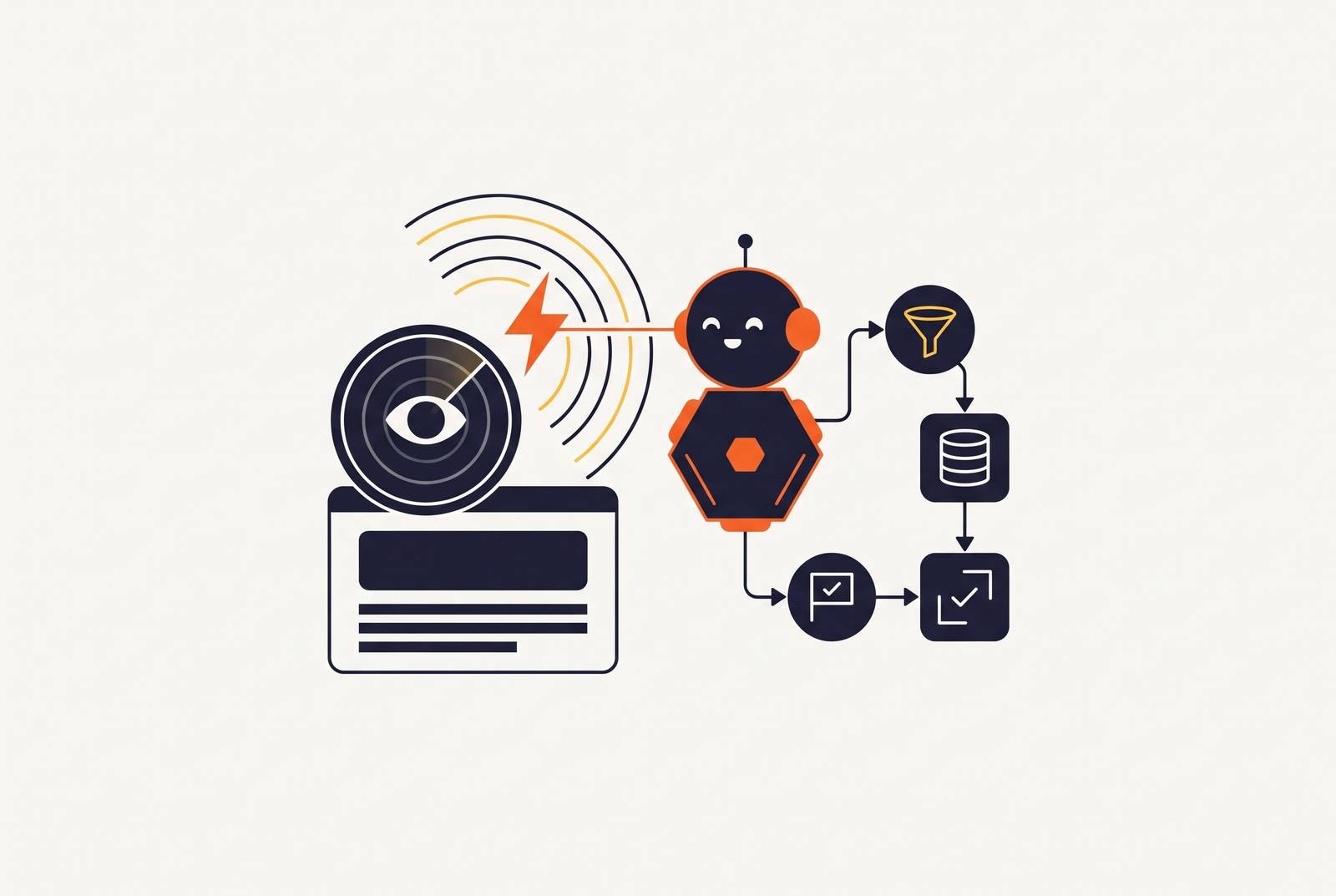
An event-driven web scraping API with webhook support lets a monitoring service detect a webpage change and notify an agent’s HTTP endpoint, rather than making the agent repeatedly check for updates. The production pattern is detection, context assembly, and bounded action. Web signals take the place of manual prompts, but for an agent to act on its own, those signals must become structured events it can reason on right away.
Why AI agents built on manual prompts hit a ceiling in production
Consider a product team that discovers a competitor’s pricing change two days late because nobody thought to prompt the agent. The agent might produce a fine analysis once asked, but it cannot recover the lost response time. Its intelligence was never the bottleneck here. The team still had to remember to look, decide when to look, and start the work.
Competitor announcements, regulatory changes, and market signals come at unpredictable times, while human attention has other appointments. An agent waiting for instructions inherits that delay, whether it lasts hours or days. A faster executor saves work once someone spots an event, but someone is still on the payroll to spot it.
The polling trap: why scheduled checks are the wrong trigger layer for agents
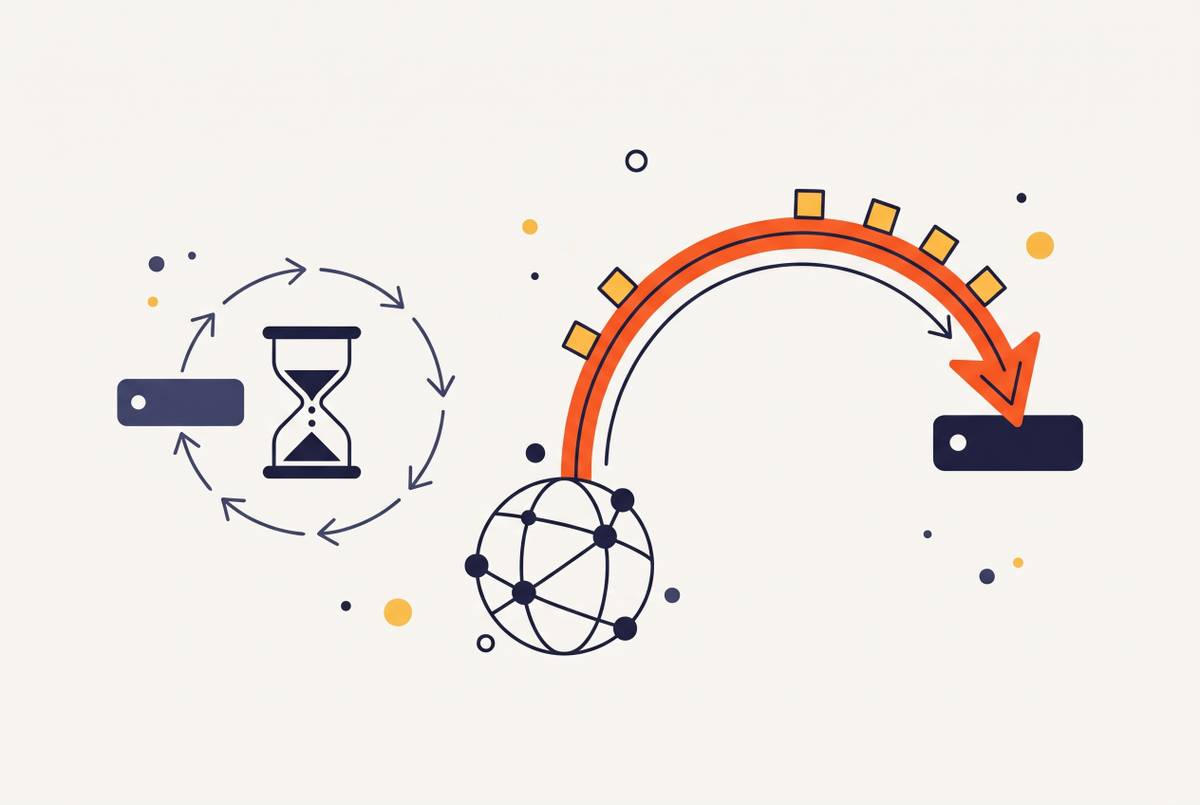
Putting the prompt on a timer seems like the obvious repair. The agent wakes, checks for changes, usually finds nothing, and goes back to sleep. Every empty check still consumes compute and API quota, and an LLM-driven check can consume tokens too. The timer has automated the interruption. A 30-second interval leaves up to 30 seconds of blind time, while hourly checks cannot support a real-time response.
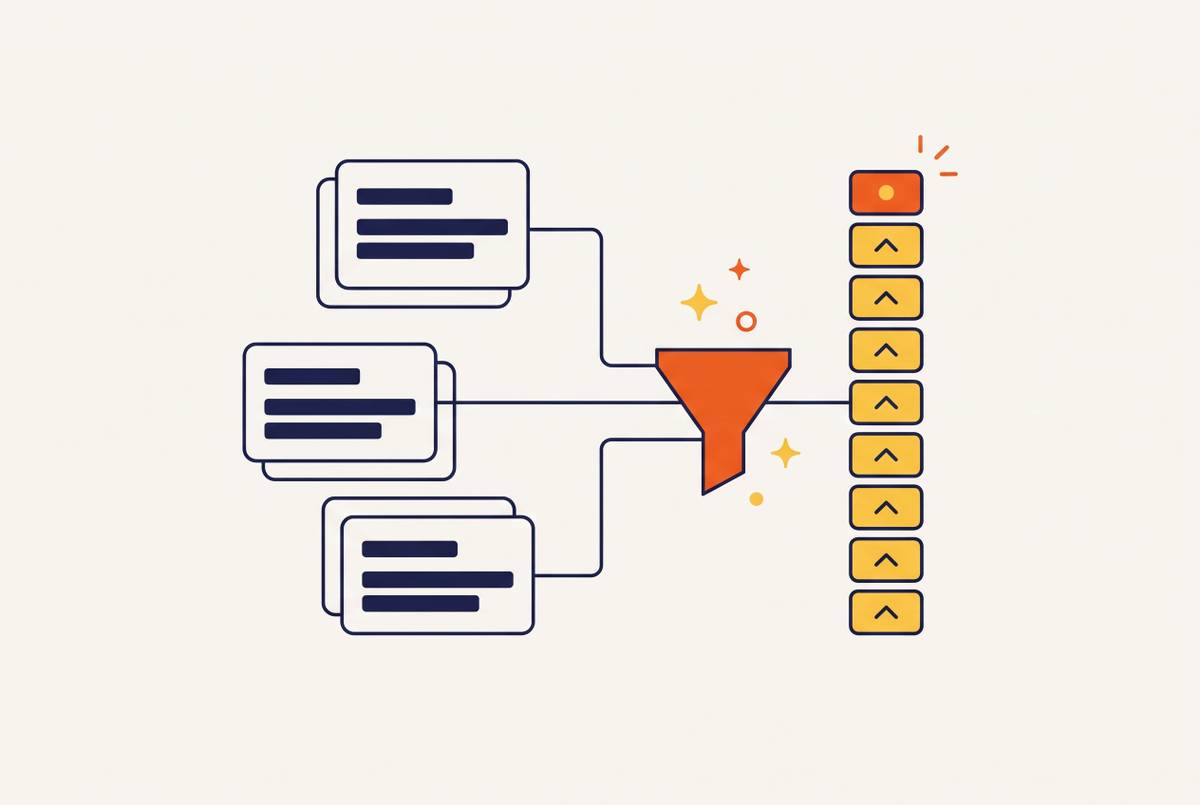
When N agents each poll M services, the system has O(N × M) connections to maintain. An event bus changes that pattern to O(N + M), because producers and consumers connect through a shared routing layer. Polling is simple to build at first. However, that simplicity shifts work into ongoing bills and brittle integrations as the system grows. Event-driven architecture removes repeated checks for changes from the agent’s job and delivers work when there is work to do.
How do webpage changes trigger an agent through a webhook?
An event producer detects a relevant change, an event bus routes it, and a consumer acts on it. For web monitoring, the practical spine has three components, which are a monitoring API, a webhook endpoint, and downstream processing logic. The API scans on a defined cadence and POSTs structured JSON to the endpoint when it detects a match. The agent wakes with a task already attached. At the simplest scale, webhook delivery provides the event handoff without a separate queue-management layer.
This distinction prevents a common misunderstanding about “no polling.” The monitoring service still checks the web on its cadence, so detection is not magically instantaneous. What disappears is the agent’s need to keep checking for work or asking whether results are ready. For higher throughput or replay, Kafka or Kinesis can extend the same pattern with an event stream. Multiple agents can also cooperate through choreography, with one emitting a “task.completed” event that starts another’s step. The agents stay separate rather than becoming one large, easily startled machine.
What web monitoring signals actually look like as agent inputs
A useful signal says more than “this page changed.” A pricing change, regulatory filing, funding announcement, or leadership change needs enough context to support a particular action. A machine-facing payload can include a summary, source URLs, event timestamps, and grouping identifiers. Those fields give the agent something to work with. An alert without them merely moves the investigation from a person’s inbox into an agent’s workload.
Visualping and similar monitoring tools illustrate the human-facing monitoring category, where a person is the intended reader of the result. The distinction is not a vendor ranking. Traditional monitoring workflows often center on URL and CSS-selector setup, HTML diffs, and delivery to email or dashboards, whereas programmatic monitoring APIs can accept natural-language queries and deliver deduplicated JSON through HTTP callbacks. Semantic matching also avoids tying a query to a particular DOM position that a site redesign can displace. However, machine-readable delivery is only the first step. Once the payload reaches the webhook, what format gives the agent the clearest evidence for its next decision?
Why raw web content fails as agent input and what format to use instead
Raw HTML makes the agent sort useful content from markup, scripts, and navigation before it can reason. That is expensive housekeeping. A Markdown rendering can deliver approximately 1,200 tokens of readable page content at a fraction of the raw HTML token count. Markdown suits reading tasks because it preserves headings and lists, while JSON suits typed fields that downstream systems will store, route, or compare. Plain text is enough for simple extraction when the structure of the document adds nothing.
The practical rule is to deliver Markdown when the content needs reading and JSON when it needs storing or querying. For retrieval-augmented generation, chunked Markdown also needs source metadata attached to each chunk so answers can point back to their evidence. Extraction pipelines need another safeguard beyond readability. A versioned, strongly typed event schema lets processing fail loudly when an upstream payload changes, rejecting malformed data. That turns a format decision into a reliability contract, which becomes especially important once the agent can write to other systems.
The three-stage pipeline: from raw web change to structured agent action
A competitive intelligence workflow makes the three stages concrete. Detection monitors TechCrunch, Product Hunt, and company blogs for competitor mentions, deduplicates matches, and sends a webhook for a net-new launch, feature announcement, or funding round. Context assembly enriches that event through a search API. Action then produces a structured briefing on competitive impact and posts it to a dedicated Slack channel. Product managers receive the signal sooner, cutting the delay from days to hours.
The same architecture works for sales triggers, with the work split the same way. Monitors run in parallel to watch for leadership changes, funding announcements, and technology migrations, and enrichment matches each event against CRM records. The agent can then classify it as pipeline-in-progress or a net-new opportunity and push the enriched trigger to Salesforce with a suggested outreach angle. Skipping that stage forces it to reconstruct information through extra queries, adding calls and delay for every event.
AWS shows the same pattern at work in manufacturing, outside web research. At 2:47 AM, a pressure sensor begins drifting, and a streaming pipeline assembles device history, maintenance schedules, and correlated readings before invoking an agent. The agent opens a maintenance work order, adjusts the sampling rate, and notifies the on-call engineer before a human sees an alert. The sensor is not a web signal, but the separation of responsibilities is the same. Wherever an external change maps to an agent action, detection can stay distinct from context and execution.
Making event-driven agent pipelines reliable in production
Idempotency comes first because webhook retries can deliver the same event more than once. Without it, one announcement can become duplicate CRM entries, Slack posts, or work orders. An idempotency key should be derived from the event ID, or a hash of event type plus timestamp, and stored in Redis or a database with an expiry. Reject an event whose key already exists. The agent should not interpret a delivery retry as breaking news.
Failures need a destination as well as retries. A dead letter queue captures events that exhaust their retry attempts, preserving them for inspection or reprocessing. Correlation IDs link the chain of events across agents and systems, and raw events that have been stored can be replayed through updated logic. Together, these make failures traceable and decisions reproducible. They also let teams test changes in behavior with past inputs before using them on live traffic.
Even when delivery works well, the signals it feeds an agent can get worse over time. Monitoring queries drift, schemas change, and confidence can fall as the web changes beneath the pipeline. Automated checks should detect confidence drops, schema changes, and exception spikes, then pause and escalate when risk exceeds the threshold. Action permissions need similarly firm boundaries. Read-only operations should be the default, low-risk writes should be limited in scope, and high-impact actions should need human approval.
Connecting web monitoring signals to MCP-native agent toolchains
Model Context Protocol, or MCP, is an open-source standard that connects AI applications to external tools and data sources. It lets agents discover capabilities at runtime rather than rely entirely on endpoint routing written by developers. MCP servers typically wrap REST APIs underneath, so adoption does not require replacing the existing data infrastructure. The webhook still starts the workflow. MCP gives the agent a way to find and invoke tools once that workflow is running.
For this pipeline, the most useful connection is context assembly. Search, scraping, and crawling can become discoverable tools that the agent selects in event-specific sequences. That flexibility needs limits. Teams should use least privilege, pin versions, and audit how tools are used. The protocol is governed through the Agentic AI Foundation under the Linux Foundation, and changes are proposed through Specification Enhancement Proposals, which also gives teams a formal process to review. With an MCP-accessible monitoring API, the agent can invoke enrichment itself as its reasoning needs become more specific.
Infrastructure choices that determine whether the pipeline scales or breaks
Putting browser calls, HTML parsing, and retries inside agent code makes the reasoning path responsible for data collection failures too. Site changes can then disrupt execution unpredictably, while proxy rotation, rate limits, and fragmented scraping tools add overhead to every event. An infrastructure-first design moves that work into a dedicated data layer. Keeping that work separate stops data collection from using up the resources meant for analysis.
For buyers evaluating an event-driven web scraping API with webhook support, delivery mode is only one criterion. The data layer also needs natural-language-queryable monitoring, clean Markdown or JSON, deduplication across runs, batch processing, and crawling for multi-page enrichment. A change notification and a data-ready callback serve different purposes. The former identifies a new condition, while the latter tells downstream processing that requested data is available. The API needs to supply the signal and usable content the workflow needs without making the agent poll for either.
Signal quality is also a cost-control mechanism. Noisy or duplicate events use up LLM tokens even when the agent decides in the end that nothing needs doing. As coverage grows from a single monitor to dozens or hundreds, that waste grows with it. The infrastructure must support the intended request volume without a redesign, including billions of requests where that scale is required. A webhook alone does not establish that capacity, any more than a loading dock establishes the size of a warehouse.
What genuinely autonomous agent workflows look like when web signals replace human prompts
Autonomy within a task is different from autonomy across a workflow. A prompted agent can choose how to complete an assignment, but a signal-triggered system can also detect when the assignment should begin. Consider a regulatory update that matches a monitoring query. The webhook starts context assembly, the agent receives structured evidence, and the workflow flags the risk or opens a ticket within its permitted scope.
That destination does not require unrestricted action or an unattended black box. A high-impact response can stop at an approval gate while the detection and preparation remain automatic. The practical path is to connect monitoring, structured context, and bounded actions through the three-stage pipeline, with recovery and tracing built into the handoffs. The necessary components already exist. The remaining constraint is engineering discipline, so that a natural-language monitoring query leads through the inbox to useful work.