Avoiding Bot Detection When Running Production Monitoring Pipelines
Resilient monitoring requires defeating detection across five independent layers, not just one.

Avoiding bot detection in production monitoring pipelines requires a distinct mitigation for each of five layers, which are IP reputation, TLS fingerprinting, browser fingerprinting, behavioral analysis, and CAPTCHAs. Passing four does not compensate for failing one. Reliable monitoring therefore depends on maintaining the whole stack, or choosing verified access where the target supports it.
Why production monitoring pipelines face a different detection problem than one-off scrapers
The most dangerous failure is a successful tool call containing the wrong page. When an AI agent encounters a Cloudflare challenge or a 403, its tool call can register as successful and pass the detection page to the model as real content. The pipeline stays green while its input turns sour. This is silent data poisoning. For monitoring, this failure makes access reliability part of data quality as well as uptime.
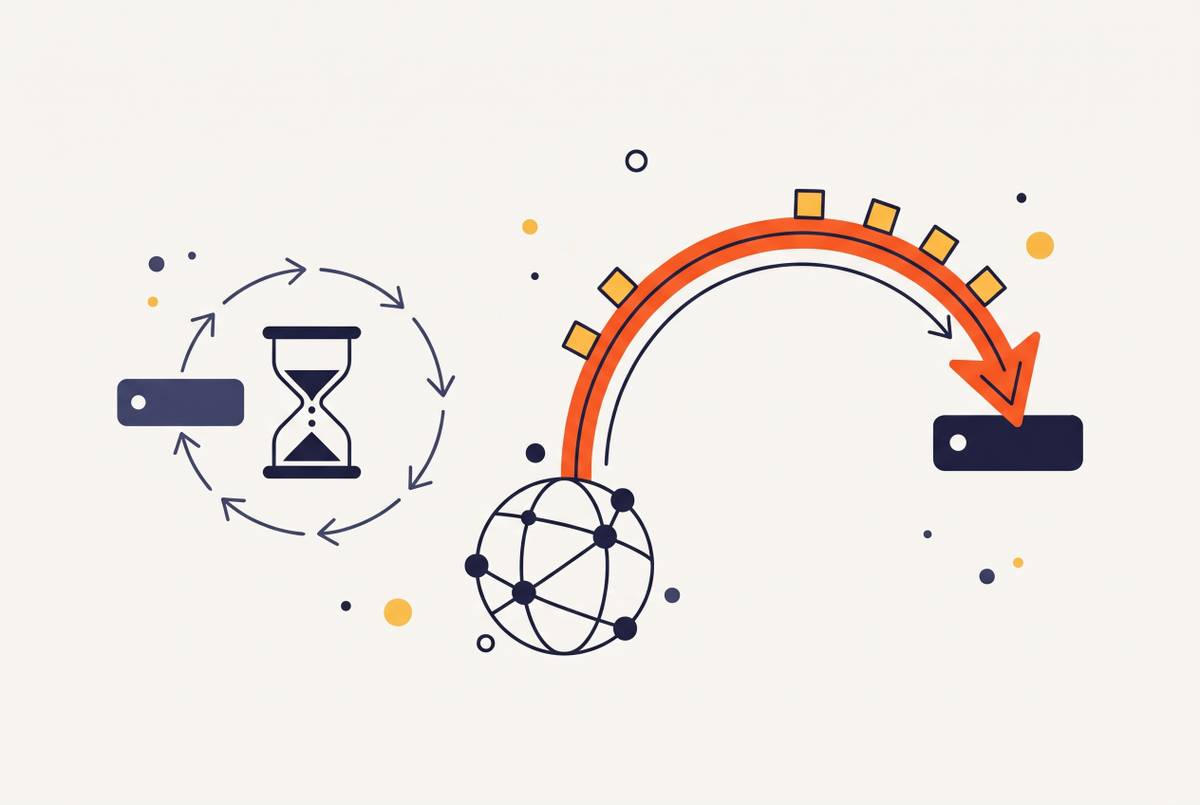
Continuous operation compounds the problem because monitoring revisits the same targets across days or weeks. A one-off scraper needs one successful passage, while a scheduled pipeline keeps presenting evidence to the defender. With AI-assisted coding, it is easier to build a bot. Running it sustainably has become harder, because each detection layer introduces another way for repeated visits to fail.
The first engineering step is identifying the defender from raw HTTP response headers, cookies, and scripts before writing bypass code. Vendor differences are not cosmetic details here. A Cloudflare bypass fails on Kasada, while a session approach that clears PerimeterX does not work on Akamai. Cloudflare exposes a CF-RAY header by default, though Transform Rules or Workers can strip it, and uses cf_clearance, __cf_bm, and scripts under /cdn-cgi/challenge-platform/. Akamai exposes akamai-grn on all responses, uses _abck and akamai-bm-telemetry, and shows a Reference # number on block pages.
Kasada provides a different set of clues. These include x-kpsdk-* headers, such as x-kpsdk-ct and x-kpsdk-cd, nearly empty 429 or 403 responses, and ips.js or p.js. Its KP_UIDz cookie name is customer-chosen and may vary. DataDome uses X-DataDome-* response headers, the datadome cookie, and tags.js. These clues establish which mitigation problem the pipeline actually has.
Layer 1 — IP reputation: why rotating proxies is a necessary but insufficient first step
IP reputation is the outermost gate every request encounters. If the address fails there, the browser and behavior stack never get evaluated. Many builders start with datacenter IPs, but these are the weakest choice for targets that have protection. Residential proxies achieve meaningfully higher success rates because requests appear to come from consumer addresses. That difference makes proxy selection an operating-cost decision.
The cheaper sticker price can conceal the dearer result. A datacenter proxy may cost less per GB but more per GB of data the pipeline can use when failed requests count toward the bill. Rotating residential proxies also prevent the IP-level pattern that accumulates when monitoring repeatedly visits the same URLs. The practical recommendation is to match the proxy type to protected-target requirements and use rotation for repeated access. Residential addresses solve only the IP reputation layer.
Layer 2 — TLS fingerprinting: what happens when a real IP carries a bot's handshake
A residential IP paired with a Python requests TLS fingerprint presents an immediate mismatch. The address looks plausible, but the connection announces a different identity. TLS fingerprinting examines the cipher suites, extensions, and elliptic curve preferences presented during the handshake. A Python HTTP library generates a signature that a real Chrome browser does not. Declaring a Chrome User-Agent does not erase that signature.
The governing rule is consistency between the declared browser and its TLS profile. Playwright addresses this by driving a real browser with a genuine browser handshake. Python’s tls-client instead mimics a specific browser’s TLS profile. The tool is secondary to the match. A Chrome name badge does little good when the handshake introduces itself as Python.
Cloudflare’s Managed Challenge and Turnstile operate after TLS evaluation, so a request rejected here never reaches the JavaScript challenge phase. The mitigation is therefore a browser-compatible TLS stack whose profile matches the User-Agent. With that match in place, compute for handling challenges goes to requests that can reach the challenge.
Layer 3 — Browser fingerprinting: the detection surface inside the JavaScript environment
After the handshake succeeds, detection moves inside the JavaScript environment. Cloudflare’s Managed Challenge collects browser telemetry including canvas rendering, WebGL renderer strings, audio-context fingerprints, screen resolution and color depth, and timezone offsets. It checks those signals against what it would expect from a human. A headless browser that leaves those values unspoofed is exposed.
AI agents make this problem sharper because their browser environments are more uniform than the human population they seek to resemble. The MARK paper, published in June 2026, finds that all evaluated LLM-based web agents can be distinguished from humans and from each other through network, HTTP, and browser fingerprinting. No evaluated agent evaded all three layers simultaneously. Some AI companies, including OpenAI, have also publicly declared their agent fingerprints. Those declarations make the fingerprints straightforward for defenders to enumerate.
Fayolle et al.’s honeysite measurement study finds that stealth and anti-detection mechanisms often increase detectability. Playwright-stealth patches and purpose-built stealth browsers fix known leaks, but the patches can leave signatures of their own that stand out. A shared disguise is still a uniform. For production pipelines, the mitigation is fingerprint management that creates realistic entropy through plausible, heterogeneous browser profiles, rather than applying one supposedly invisible configuration to every request.
Layer 4 — Behavioral analysis: how timing, scrolling, and interaction patterns expose automation
A plausible browser can still act unmistakably like automation. FP-Agent finds that behavioral fingerprints have greater discriminative power than browser fingerprints for distinguishing LLM-based web agents. Agents trained to evade browser-layer detection remain identifiable through their actions. How agents type, scroll, and use the mouse sets them apart from humans and from one another. The browser may look right while its choreography gives it away.
Scoring systems can pick up synthetic mouse movement, instantaneous form filling, deterministic scrolling, and zero-variance intervals between actions. Repetition makes these signals especially relevant to monitoring. Akamai Bot Manager begins assigning a bot score on the first request and refines it as more requests arrive from the same source. A successful first visit is therefore not a lasting clearance. Later sessions can accumulate a high bot score when the behavior remains inconsistent with human activity.
Known By Their Actions finds that randomized timing delays substantially degrade classifier performance, but retraining on delayed traces largely restores it. The practical mitigations include delays with realistic variance distributions, natural scrolling before extraction, session warming through ancillary pages, and variation in action sequences across visits. Because classifiers can adapt, these mitigations require ongoing maintenance as part of the stack.
Layer 5 — CAPTCHAs: when earlier layers fail and the pipeline needs a fallback
CAPTCHA encounters indicate that earlier signals have attracted suspicion, while access may still be possible. Solving is a fallback. The pipeline must also distinguish challenge types because they interrupt access differently. Turnstile renders within existing page HTML without blocking the origin content. Managed Challenges hide the whole origin behind a verification screen, so the pipeline must get through a full interstitial before it can go on.
A Managed Challenge can issue a cf_clearance cookie with a time-based lifetime configured through Challenge Passage. Without persisting and replaying that cookie, a pipeline re-encounters the challenge on every request. Services such as 2Captcha and Capsolver integrate with automation to resolve challenges programmatically. The pipeline submits the challenge token, receives a solution, and reuses applicable clearance within the same session.
When CAPTCHAs keep appearing, finding the cause should take priority over spending more to solve them. Consistent challenges on a monitored target indicate behavioral or fingerprint signals that upstream mitigations have not suppressed. The recommended response is to fix the implicated layer. Otherwise, the fallback becomes the usual way through, and every visit needs another check at the verification desk. The five layers interact multiplicatively because each successful passage is conditional on surviving the others, which makes maintaining the whole chain harder than assembling its parts.
Why Kasada and the hardest targets make DIY five-layer stacks unsustainable in production
Against Kasada and the hardest targets, a correctly assembled DIY stack can break within days of a challenge update. Initial success says little about maintenance demand. The difficult work is keeping each vendor-specific mitigation current while the pipeline continues revisiting its targets. Each new vendor brings more changes to keep up with. A bypass is not a finished component when its counterpart keeps changing.
A production stack needs more than one compute instance, a job queue, and subscriptions for residential proxies. Engineering time for per-vendor updates then accumulates on top. At meaningful volume, residential proxy subscriptions alone often exceed the cost of a managed API. Comparing only API fees with proxy sticker prices leaves most of the DIY bill off the page.
DIY can work at small scale against one vendor. Its practical limit appears as challenge updates and additional vendors multiply the upkeep. For production monitoring across the hardest targets, the sustainable path is managed infrastructure that maintains the five-layer stack. Managed access still faces detection.
The structural shift from evasion to identity, and what it means for monitoring pipelines specifically
Bot access is shifting from spoofing humanness toward cryptographic identity. That changes the available route, but not for everyone. Cloudflare’s directory lists a large number of AI bots, and a significant proportion send no distinguishing User-Agent string. Cloudflare identifies them through IP ranges and signed-agent metadata instead, leaving User-Agent-based robots.txt distinctions structurally unable to address that group. A declared browser or crawler name is no longer the whole identity story.
Cloudflare’s policy as of September 15, 2026, blocks Training and Agent crawlers by default on ad-supported pages for new domains, while Search remains allowed by default. The distinction is about use case. A recognizable agent does not automatically earn every kind of access. For monitoring pipelines, that means verified identity and permission to perform the intended work are separate questions.
Verified identity offers a way in for agentic commerce and AI-assistant use cases when the target gains from that access. Competitive intelligence and price monitoring face a different incentive. Sites being monitored have no reason to allow verified access just to help with competitive extraction. For those workloads, the five-layer evasion stack remains the relevant engineering path. The shift to identity also sets a higher bar for access once sought with a search-engine User-Agent, because that level of access now needs cryptographic proof.
The practical decision rule starts with the target’s incentive. Verified identity is the recommended path where legitimate bot access helps the site, including content publishers or e-commerce sites that get price comparison traffic. Where the target has no incentive to permit access, the options are an engineered five-layer stack or a managed API that maintains it.