Structuring Alumni Network Data for Referral Pipeline Automation
Stale alumni data kills referral automation before it starts.

Alumni offices love to talk about their network as an asset. In practice, most of that asset is a spreadsheet frozen in time, and automation built on top of it fires blind. The moment someone graduates, their record starts going stale: they move cities, switch jobs, let old email addresses die on the vine. A CRM or student information system export captures just a single instant, the moment of departure, and it was never built to track what happens after. Connect Networks puts it this way: most alumni programs amount to an occasional newsletter, an annual giving appeal, and a reunion that's genuinely nice but over in a weekend. That's passive infrastructure. It works fine for the alumni who already know what they want and show up looking for it, but it leaves everyone else unreachable. Almabase's 2026 alumni network guide traces the same pattern from a different angle: networks that start life as email lists, spreadsheets, and LinkedIn groups hold together fine until someone tries systematic outreach, at which point fragmented, unvalidated contact data causes the cracks to appear in that outreach. For referral automation specifically, the cost is concrete. Automation fires against whatever records it's handed, and industry data suggests that 30 to 40 percent of email addresses in a typical alumni database bounce, because the contact data behind them is out of date. It's a pipeline that sends requests to the wrong people, or to no one at all, and calls the result a referral program.
What a referral pipeline needs from alumni records before it can fire reliably
A referral pipeline doesn't need a perfect record on every alumnus. It needs enough validated, current fields to make one routing decision with confidence: who this person works for, how senior they are, where they're based, and a way to actually reach them. If the automation misses any one of those, it is guessing. Boomerang's 2026 pipeline generation guide makes the bar concrete, scoring each relationship on recency, frequency, depth, and reciprocity through warm-graph orchestration. That means the pipeline needs time-stamped interaction signals on top of identity fields, because "this person graduated in 2014" tells you nothing about whether they'll answer an email today. Enterprise Alumni's AI and Automation services draw a sharp line between a one-time data cleanup and genuine continuous enrichment, and only the second model keeps contact data deliverable and routing criteria accurate as time passes. Routing logic also needs categorical structure, not prose. A free-text job title like "Head of Growth, kind of, also doing some ops stuff" is unusable to a machine trying to group people by seniority or industry. And a deliverable email address alone isn't enough: a pipeline that can technically reach someone but routes them into the wrong context, the wrong company stage, the wrong geography, burns the goodwill of the introduction without producing anything useful.
The five-stage enrichment architecture that converts a static export into a workable dataset
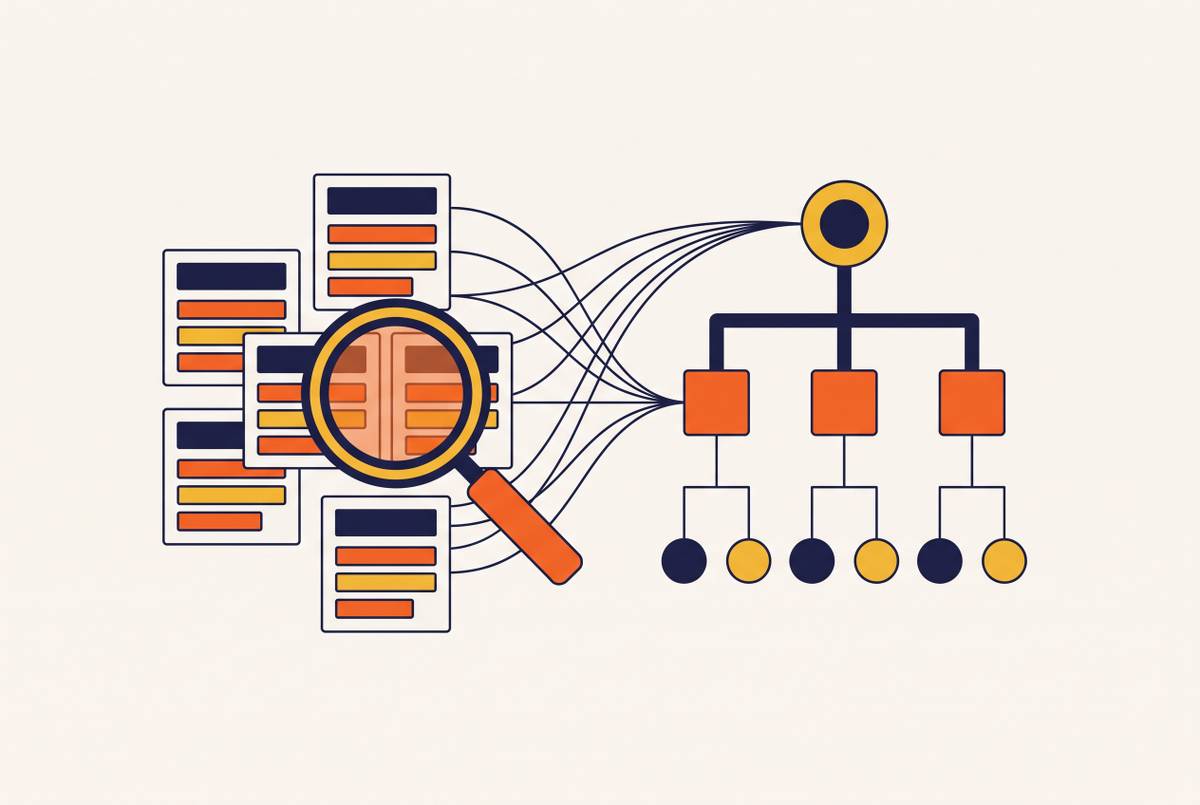
Turning a raw alumni export into something automation can trust takes five stages, and if you skip any one of them, a specific kind of error slips through undetected. The first stage is input validation: parsing the source file, normalizing names (suffixes, hyphenations, preferred names all handled consistently), checking email format, and removing duplicates. Problems caught here stop there instead of rippling through every later stage; that is why it comes first rather than last. The second stage is email verification, run through MX record lookups and SMTP handshake checks that estimate deliverability without actually sending anything. If an address fails an MX lookup, it gets flagged immediately instead of quietly bouncing weeks later when an automated outreach campaign finally reaches it. The third stage is public data enrichment, where the pipeline queries outside professional-data sources for a person's current employer, role, location, and profile link. This stage lives or dies on matching logic: fuzzy name matching, location-aware scoring, and graduation-year correlation all have to work together, because a common name needs far stricter matching criteria than a rare one before the system can call a match confirmed. The fourth stage is confidence scoring, where each enriched record gets a composite score built from email deliverability, name match quality, location recency, and whether multiple sources agree on the same facts; anything below a set threshold gets flagged for a human to look at. The fifth and final stage is structured output with provenance, exporting clean, structured records where every enriched field carries its source and the date it was last verified, so any system reading that record downstream knows how much to trust it and when it's due for another look.
Confidence scoring as the mechanism that separates trusted automation from manual chaos
Strip confidence scoring out of this architecture and only two paths remain, and both are bad. One option is to trust every enriched record automatically, but then you act on garbage data whenever the enrichment process gets something wrong. The other is sending every record to a human for review, undercutting the purpose of building automation. Confidence scoring opens a third path: auto-accept the records that clear a high bar, send the middle tier to a person for a quick check, and block the low-confidence records from triggering anything until someone resolves them. Studiously's methodology makes an important architectural point here: confidence isn't one number but a stack of separate gates, each doing a separate job. Provider likelihood, normalized field comparison, and deterministic checks for things like impossible chronologies or conflicting profile URLs all run independently. A model can be highly confident about a match and still be wrong, and no confidence score, however high, should be allowed to override a record whose timeline is internally impossible, such as someone graduating after they had already become a VP. That stack of checks is what separates a referral pipeline from a glorified mail-merge: it's the architecture that lets automation run unattended most of the time while still catching the cases where it shouldn't.
Structuring Alumni Records for Routing Logic
If enriched data sits in free-text fields, it can't actually be used. A pipeline can know everything about an alumnus and still fail to route them correctly if two different job title strings for the same role are never resolved into the same seniority band and region. The minimum schema a referral pipeline needs includes a normalized industry classification, a seniority band rather than a raw title, a canonical geographic market rather than city-level free text, an employment status flag, a last-verified timestamp on each field, and a confidence tier for the record as a whole. Boomerang's pipeline guide builds its warm-graph routing around a Connector Score combining recency, frequency, depth, and reciprocity. The schema has to store interaction history alongside static professional facts to rank relationships, not just list them. Enterprise Alumni's CareerMatch service demonstrates why this matters in practice: keyword matching on job descriptions misses candidates who are genuinely a good fit, while a system that sources matches based on experience, interests, and career goals needs structured, classified fields to work. Think about what happens when a board seat opens up and someone needs a director-level introduction in a specific industry. With a seniority band field, that's a filter. Without one, it's a search through hundreds of job titles trying to guess who counts as senior enough. Studiously's output layer reflects the same discipline: the fields that actually get used downstream, industry, seniority, company type, location, summary, are classification outputs built from enrichment, not the raw text a data provider handed back. And schema can't be designed in isolation from enrichment. If the enrichment stage never resolves "Google," "Google LLC," and "Google DeepMind" into one canonical employer, routing logic built to segment by company will split one real cluster of alumni into three fake ones.
Keeping the dataset current through continuous enrichment triggered by career-change signals
If a dataset is perfectly enriched on launch day and never touched again, it's right back where it started within a year. The only architecture that holds up over time is one where career-change signals, a new job, a promotion, a move across the country, automatically trigger re-enrichment of the specific record affected. A job change to a new employer or role, a promotion at the same company, a relocation, or a shift in company stage, like a startup an alumnus joined early that has since scaled or been acquired, are the signals worth watching. Enterprise Alumni's Ongoing Data Enrichment service treats this as infrastructure rather than a once-a-year cleanup project, so it provides continuous updates that track where alumni have moved and verify their most recent email addresses. Connect Networks applies the same logic to relationships instead of job titles: biweekly peer matching keeps creating fresh touchpoints between campaigns, and those interaction-recency signals need to be written back into the record too, not just professional updates, or the Connector Score goes stale right alongside the contact information. A monitoring layer watches for career-change signals tied to tracked alumni and produces this pattern. When a signal fires, the record queues back through Stage 3 for enrichment and then Stage 4 for confidence re-scoring. If the new score clears the auto-accept threshold, the record updates on its own. If it doesn't, it goes to a human. Monitoring public professional signals at this scale, across thousands of records, continuously, is a job for a unified web data API built to handle search, crawling, and monitoring together, rather than stitching together a separate tool for every signal type.
Privacy and compliance constraints that must be built into the pipeline architecture from the start
Alumni data is personal data, full stop, and every stage of this pipeline, from collecting it to enriching it to routing it to feeding it into an LLM, counts as processing personal information under GDPR and similar frameworks elsewhere. That reality needs to shape the architecture from day one, not get bolted on after launch. Data minimization is both a legal obligation and a design principle: the pipeline should request and store only what a given routing decision actually requires, and even public enrichment sources need careful handling once they're being aggregated programmatically at scale. Studiously's methodology builds this directly into its review layer: it records accept and reject decisions separately from the original provider responses, so it preserves both what a data source returned and what a human chose to do with it. That audit trail is exactly the evidence a GDPR review would ask to see. Anonymizing or pseudonymizing records before they're sent to external LLM APIs shrinks the compliance exposure considerably, since most synthesis tasks don't actually need full PII. If you pair an anonymized identifier with a confidence tier, an industry classification, and a seniority band, that's usually enough for routing logic to do its job. GDPR's 72-hour breach notification window means the pipeline needs logging and alerting built for incident response, not just for debugging when something looks off. If a team treats this as a pure machine learning problem and pushes compliance architecture to after launch, they tend to find out the hard way that the compliance bill ends up bigger than the model bill.
Enabling Referral Automation to Fire at the Right Moment
Put all of it together, validated contact fields, a structured categorical schema, per-field confidence scores, interaction-recency signals, and event-triggered re-enrichment, and the pipeline can finally do what no alumni relations team could ever do by hand: it routes the right introduction to the right person at the moment a signal says it matters. Boomerang's warm-graph orchestration model lays out the full motion. For each target account, the system identifies which connectors have a path to the buyer, ranks them by Connector Score, drafts the introduction request in that connector's own voice, routes it for one-click approval, and tracks it from request through reply through meeting through opportunity. None of that motion can run on records that are stale, unscored, or structured as loose text. Enterprise Alumni's Automated Outreach service shows the same payoff from the segmentation side: outreach refined by location, job role, or other demographics reaches alumni who'd otherwise never hear from the network at all, and that only works when the fields doing the filtering are actually normalized and validated. The event-triggered pattern, where a job change at an alumnus's company automatically kicks off a routing update, turns alumni engagement into a system that responds to real moments, so you're not waiting for the next newsletter or reunion. But none of this is really about volume. Warm introductions work because they carry someone's implicit endorsement, and that endorsement is a finite resource. Getting the data right isn't the end goal; it's what lets automation make more real connections instead of more noise.