Enriching CRM Records With Live Web Data at Outreach Scale
Live web data beats stale databases when it's monitored continuously.

A CRM record is a guess with a timestamp on it. It gets worse every day it sits there, because the person's job title, the company's headcount, and its funding stage keep moving while the database doesn't. That's the subject here: why CRM data falls apart on its own, why the usual fix (buy more enrichment) doesn't actually fix it, and what a pipeline built around the live web does differently.
Why CRM Data Decays Faster Than Enrichment Pipelines Can Compensate
B2B contact and company data loses accuracy at a steady clip every year, and the pieces that move fastest are the ones reps care about most: job titles and employers, because people change jobs, and headcount, because companies hire and shrink constantly. One example making the rounds on r/SalesOperations showed a record that listed a headcount several times the company's actual size, pulled from data that was well over a year old. Some records are born broken rather than decaying into it: a Harvard Business Review study found that roughly half of newly created data records had at least one critical, work-impacting error the moment they were entered.
None of this stays contained to the record itself. Bad data corrupts the forecast built on top of it, it skews lead scoring, and eventually it erodes the sales team's trust in the CRM as a tool worth using. Gartner puts the average cost at $12.9 million a year for an organization. The mechanism behind that number runs in a loop: low adoption produces bad data, bad data produces unreliable forecasts, unreliable forecasts erode leadership's confidence, and that erosion leads to less investment in fixing the data, which in turn makes the data worse again. Plenty of sales teams respond by quietly running their real pipeline in a spreadsheet or Notion instead, and that solves their own headache, but it leaves leadership staring at a CRM that no longer reflects what's actually happening. And when outreach gets personalized using a record that's already stale, it backfires: a prospect who gets an email referencing their old title or last year's funding round doesn't read it as effort. They read it as proof nobody checked.
Static Enrichment Databases Can't Solve a Dynamic Decay Problem
The standard response to decaying data is to buy enrichment from a vendor, which solves a snapshot problem by handing you another snapshot. Apollo, ZoomInfo, and Clearbit (now folded into HubSpot) run large contact and company databases, and depending on the vendor and the data type, those databases refresh anywhere from real-time to monthly. A leadership change or a new funding round can sit unrecorded for weeks before it appears in the data you're paying for.
The schema itself is fixed, too. These vendors decide in advance which fields exist, so if a deal depends on knowing whether a company runs a specific open-source framework, or who holds the VP of Data title, the database simply has no column for that. And because everyone buys from the same handful of vendors, every sales team targeting a given segment is working from the same list, pitching the same accounts the same way their competitors are. That's not a data problem so much as a differentiation problem, and it's baked into the model.
Coverage gaps compound it. Niche industries, early-stage startups, and international markets are underrepresented, so a Series A company that launched six months ago might not be in the database at all. Enterprise contracts for ZoomInfo or Apollo run $15,000–$50,000+ per year, buying data that depreciates, so next year's renewal pays for records that have aged another year and degraded further. Broader API and SaaS enrichment spend tends to run well above the advertised price once tokenization, prompt bloat, extra round-trips, and implementation work get counted.
Orchestration platforms like Clay improve the experience of working with these sources. Clay makes it easier to chain vendors together and layer in conditional logic, which is a genuine improvement in workflow. Better plumbing doesn't change what's flowing through the pipes: staleness, rigid schemas, and coverage gaps all come from the underlying data, and no amount of orchestration on top reaches down to fix that layer.
A Live-Web Enrichment Pipeline in Three Phases
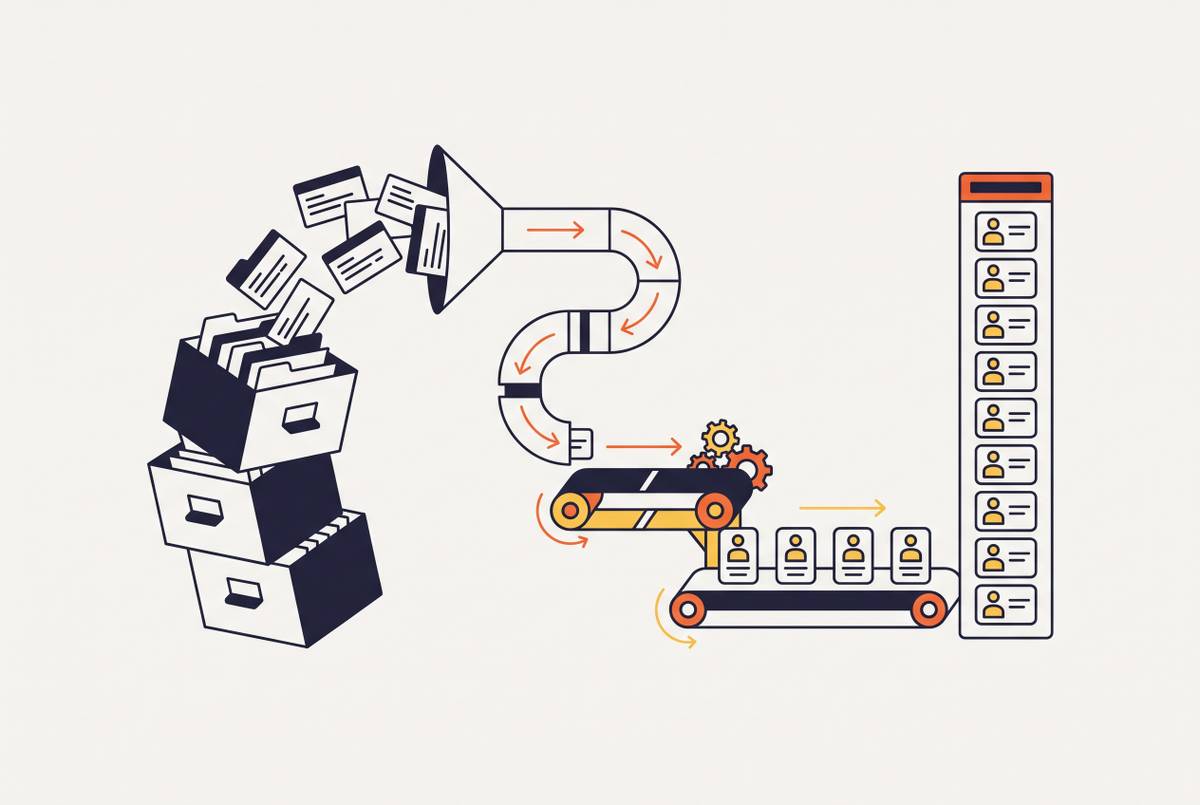
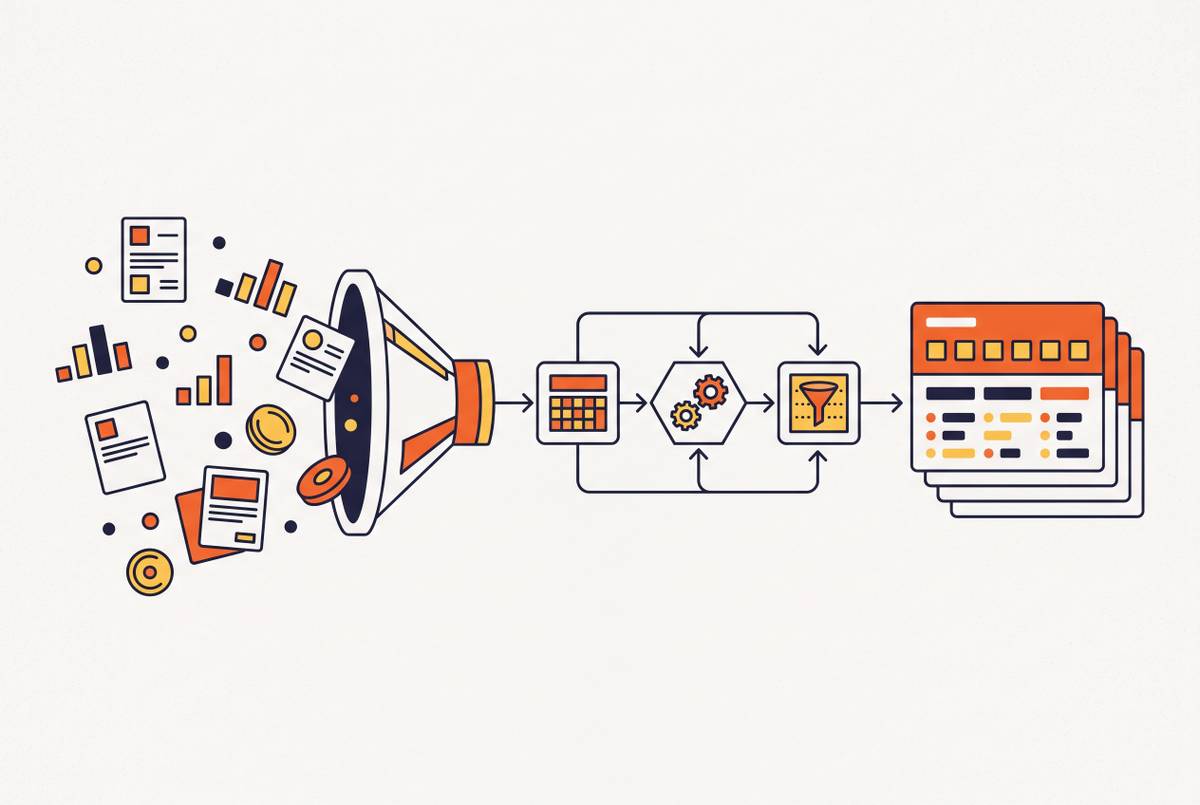
A database answers yesterday's question. The live web can answer today's, if the pipeline is built to ask it directly rather than checking a table that was filled in last month. The most durable version of this approach treats the live web as a three-phase loop: discovery, enrichment, and monitoring, run continuously rather than once.
Discovery uses natural language queries to find companies that match an ideal customer profile straight from the live web, rather than filtering a pre-built list down to size. Parallel's FindAll API is a concrete example of this: describe a target company in plain English, and it searches Parallel's own web index, checks each candidate against your stated conditions, and returns matches with citations and a confidence score attached to each one. A query like "find all Series B SaaS companies that recently hired a VP of Revenue Operations and are actively expanding their sales team" bundles intent together with firmographics, instead of just filtering on job title and industry the way a vendor database would.
Enrichment is the second phase, and it works through one structured call per company that returns fields a traditional database was never built to carry. That can mean open headcount by department, the structure of a pricing tier, exact product language, funding announcements pulled straight from a press page, or named technology partnerships. TinyFish's architecture shows the shape of this well: Search locates the right source, Fetch turns a known URL into clean readable content, and a Web Agent operates the page itself, including authorized logged-in sessions, returning typed JSON that writes straight back into the CRM. The schema for what gets collected should be decided before enrichment starts, built around the sales motion rather than around whatever fields a vendor happened to choose to track.
A monitoring layer detects changes and fires re-enrichment automatically. That gets its own full treatment further down, because it's the piece of this that separates a pipeline from a one-time pull.
How web scraping at scale behaves (and where it breaks)
Running this kind of pipeline at outreach scale isn't just "the same scraping, done faster." It runs into problems that never occur when you're pulling from a static database, because the live web is actively trying to keep automated visitors out.
A meaningful share of target pages block automated access outright, using Cloudflare challenges, browser fingerprint checks, and CAPTCHA gates. Getting past that reliably takes residential proxies, TLS fingerprint spoofing, and, often, more than one attempt at the same page. Cloudflare has made this more formal: it now blocks AI Training and Agent bots by default on ad-supported pages for new domains, while still letting Search crawlers through. That default is already affecting a large and growing share of the web, and it's pushing the whole ecosystem toward permissioned access rather than open scraping. Both sides have started using AI against each other: anti-bot systems use behavioral AI to spot scraping patterns, scrapers use AI to look more human, and each side's improvement forces a countermove from the other.
The maintenance math has flipped, too. Under the old model, building a scraper was the easy part and the real cost was constant upkeep as target pages changed their layout out from under you. Self-healing scrapers change that balance by using an LLM to catch layout changes as they happen and re-map the extraction logic automatically, cutting into the maintenance tax directly. In one documented case, a company replaced a large manual scraping team with an AI-driven system, cut first-year costs sharply, and improved accuracy at the same time.
Not every job calls for the same tool, though. LLM-based extraction costs money per token for every page it processes, so running it across millions of standardized records gets expensive fast. For that kind of high-volume, uniform scraping, a dedicated API with structured JSON output is the cheaper, more sensible choice. The rule of thumb that holds up in practice: reach for AI when the content is messy and unstructured, and reach for traditional methods when the job is high-volume and already structured. A unified API layer that handles search, scraping, crawling, and structured extraction through a single interface eliminates the operational overhead of stitching together multiple fragmented tools at different volume tiers.
Keeping enriched data current: how monitoring turns a snapshot pipeline into a living one
Skip monitoring and Phase 2's output decays at exactly the same rate as the vendor database it was supposed to replace, so even a perfectly built live-web pipeline just produces a better-looking snapshot that starts decaying the moment you capture it.
The piece of infrastructure doing the actual work here is a Monitor API: something that sends a webhook the moment one of these signals appears, connecting a change on the open web to a change in CRM state without a human sitting there hitting refresh.
The same infrastructure, pointed outward, turns into competitive intelligence. Competitive intelligence software watches competitors the same way, pulling signals from their websites, social channels, job postings, financial filings, and patent activity, then summarizing what changed. Most tools in this category now add an AI layer on top that classifies and ranks alerts, instead of leaving someone to sort through a raw, unsorted feed by hand. Gartner made the category official on April 21, 2026, publishing its first-ever Magic Quadrant for Competitive and Market Intelligence platforms, recognizing it as its own distinct and important enterprise category.
A few named tools show what this looks like in practice. Crayon tracks over 100 data types across competitor websites, review sites, job boards, SEC filings, and social channels, sold as an annual subscription. Visualping does AI-powered website change monitoring on a schedule and writes plain-English summaries of what changed, and it's one of the few products in this space with an official MCP server. Browse AI lets a team train a no-code robot to watch a specific page, such as a competitor's pricing page, a feature list, or a hiring board, and fires an alert with structured data exported automatically whenever something changes. These tools aren't a ranked list of winners. They show that monitoring has become its own established category of software, done continuously by dedicated tools rather than as a once-a-quarter task someone does manually.
Structured Output Formats in CRM Pipelines
All of the discovery, enrichment, and monitoring described above still runs into a wall if the data that comes out the other end arrives in the wrong shape. Whether a piece of enriched data writes straight into a CRM field or needs a human to sit there and interpret it comes down entirely to the format it arrives in, and that's the line between a pipeline that actually works and one that just gathers data for someone to clean up later.
An output_schema set up ahead of time forces results into typed fields, so something like employee_count appears as an actual number the system can drop straight into its column, no translation needed. The same validation applies no matter how the tool gets called, whether that's over REST, an SDK, a CLI, or MCP. Different formats suit different jobs downstream: an LLM reasons best over clean Markdown, a CRM field needs typed JSON to slot in correctly, and a human doing review or an audit benefits from HTML that keeps the original source context attached. Feeding an LLM raw, uncleaned HTML costs more in tokens than it should, because the extra markup noise makes the extraction itself worse.
None of the three phases described earlier matter much if the output is in the wrong shape at the end of the line. Discovery can find the right company, enrichment can pull the exact field a rep needs, and monitoring can catch the moment something changes, but if that information appears as a messy paragraph instead of a typed value, someone still has to stop and retype it by hand. Format discipline is what lets the rest of the pipeline run without a person standing in the middle of it.