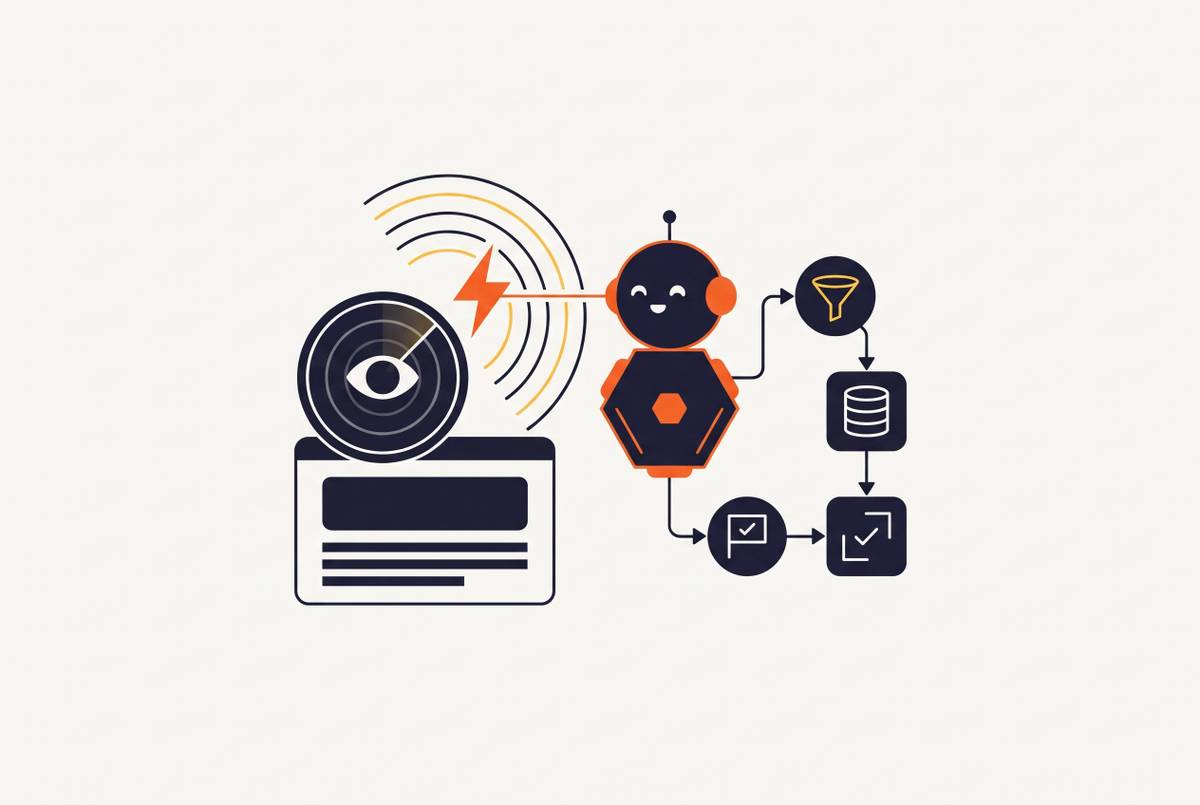
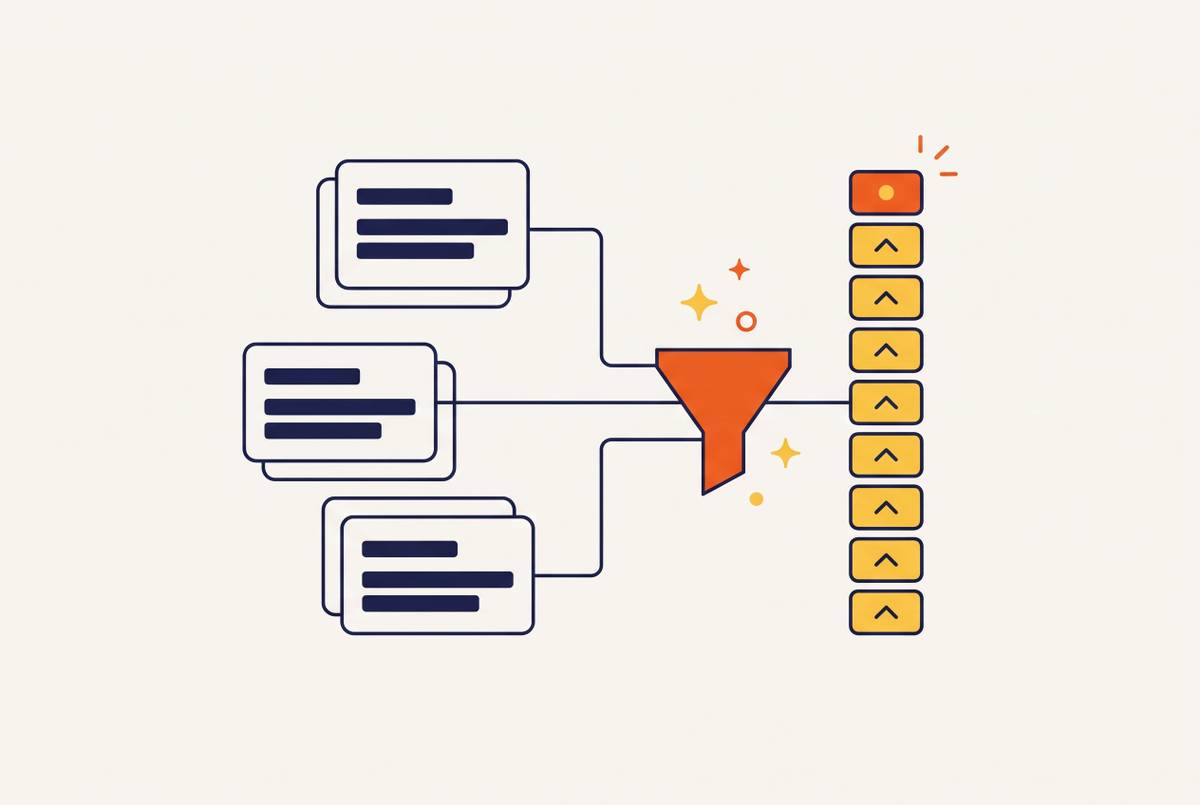
Architecting a Change-Aware Scraping Pipeline That Pushes Webhook Payloads on Every Page Mutation
A change-aware scraper needs stable IDs, diffs, and durable webhooks.
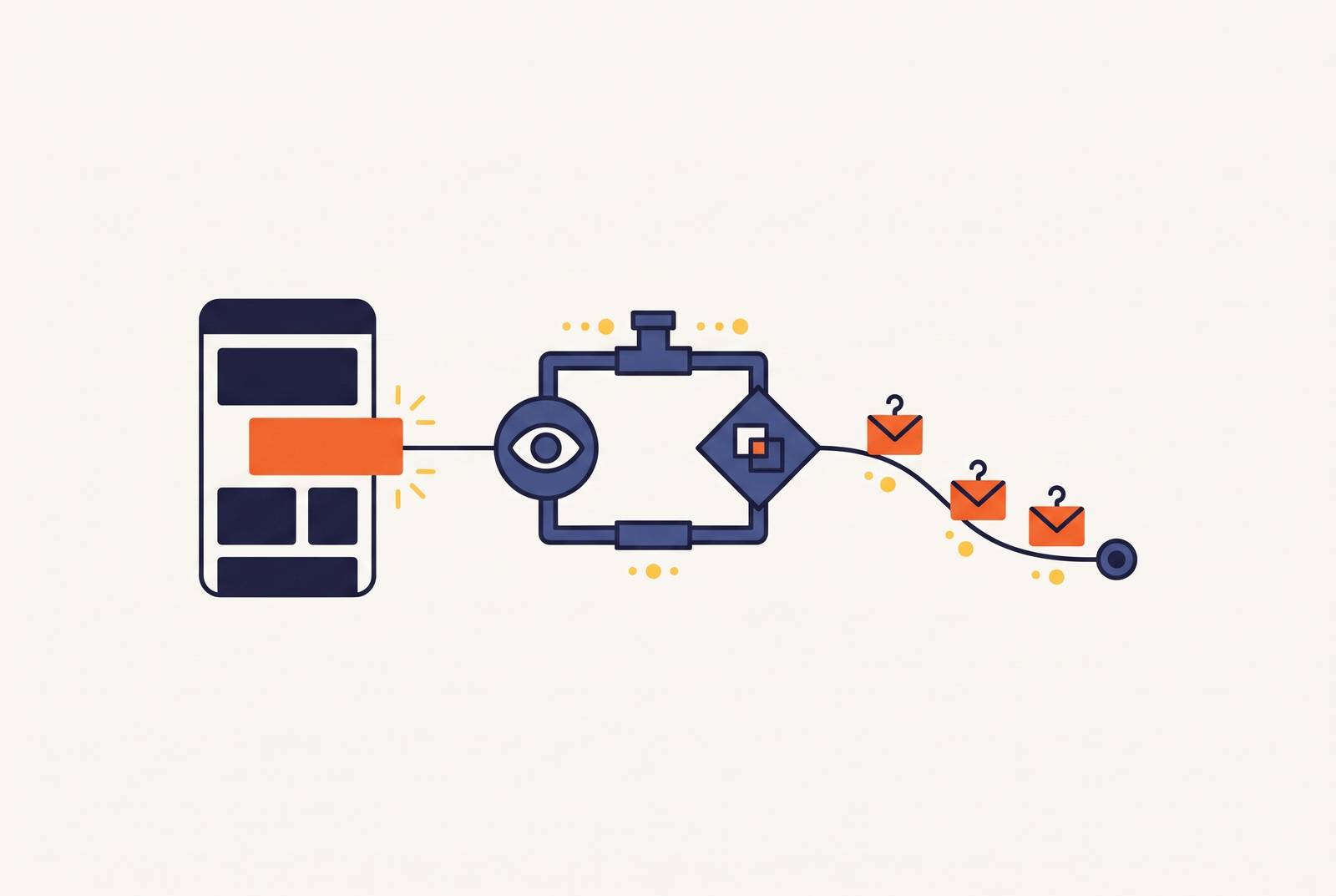
An event-driven web scraping API with webhook support needs more than a callback when a scrape finishes. It needs a monitor that detects meaningful changes, computes structured diffs, and delivers them reliably through a queue-backed webhook path. Change detection, diffing, and dispatch belong in the architecture.
Why silent page drift is now an architectural failure, not a monitoring gap
An agent that pulls from a source page and finds the ground has shifted does not pause to investigate. It treats the content as fact and acts with confidence. Meanwhile, a changed layout can make an extractor read the wrong region, or a move behind JavaScript can leave its stored content nearly empty. Embeddings are still generated, and the index still updates.
Schema changes and stale cached policy text create the same trap. The system can pass normal validation even as it drops a new pricing column or cites an old rule. Nothing has to crash for the output to deteriorate. A change alert therefore needs to become a pipeline event that triggers a webhook, a re-fetch, and automated follow-up, rather than a dashboard notification waiting for someone with a free afternoon.
Why comparing raw pages fails and which layer of the page to actually diff
Raw HTML is the ingredient list, the rendered DOM is the dish as served, and a screenshot is the plated dessert. Each answers a different question about the page. HTML is cheap to compare, but session tokens, ad slots, scripts, and randomized class names produce churn without meaningful change. On JavaScript-heavy pages, it can also miss content that appears only after rendering.
Rendered DOM or visible text should be the default for AI pipelines that track meaning, while pixel comparisons work well for visual QA but are a poor fit for machine-readable content events. One new listing can push every other listing onto another page, so positional comparisons report changes across the page. Stable records provide the useful boundary. Otherwise, alert fatigue is designed into the system before anyone receives an alert.
Giving every scraped record a stable, durable identity before hashing anything
Record identity answers whether this is the same thing seen last time. Government registers should use official record or case numbers, while product catalogues should use SKUs or store product IDs. Property records need a parcel or building identifier plus record type, and listing boards can use listing IDs from URLs. Titles, street-address text, page positions, and scrape timestamps are poor substitutes. They describe presentation or observation.
When a source has no ID, a composite key can combine fields that define the entity and never change. For example, the identity hash can use source, agency, and case number and leave out descriptive fields. Keep those inputs together in code, because changing them makes existing records look new. If there is no stable key, work out how to make one before building alerts. Guessing at identity is a costly way to make noise.
Normalizing scraped values before the hash so format drift doesn't masquerade as content change
Once identity is stable, normalization makes equivalent field values comparable. Trim and collapse whitespace, standardize enum-like case, store money as integer cents, and parse dates into ISO 8601 in one time zone. Canonical vocabulary can map “CLOSED”, “Closed - Resolved”, and “RESOLVED” to resolved. Sort list-valued fields so reordered values do not look edited.
Normalization belongs at ingestion, and only normalized values should drive comparison. Preserve the raw payload separately so an alert can be traced back to what the source actually said. Leave out volatile fields such as fetch timestamps, view counts, and tracking parameters, using ignoreFields where it is supported. Whoever owns the downstream action needs to agree on which fields to track. For compliance, status and penalty_amount may warrant action while an inspector’s display name does not, so this is a product decision.
Hashing normalized fields to detect change cheaply, then computing field-level diffs to explain it
Hash the tracked, normalized fields in a fixed order. That gives a cheap answer to “did anything change?” across hundreds of thousands of records per run. A matching hash needs only a last_seen_at update, which bulk upserts can handle efficiently. A different hash triggers the more expensive field-level comparison. The resulting diff records each changed field’s name, old value, and new value.
A scraped_records table contains record_key as its primary key, plus source, content_hash, JSON data, first_seen_at, last_seen_at, and missing_runs. An append-only record_changes table contains id, record_key, change_type, JSON diff, and detected_at. Its change types are created, updated, and removed. Removal detection must be turned on through includeRemovals, because a record that drops off a rotating first page may not have been deleted.
Identity also determines how edits appear in this log. If JSON items fall back to content hashes as identifiers, an edit becomes an add-and-remove pair. Set idField when a natural identifier is available.
How do you get notified via webhook when a webpage changes?
The webhook is the contract between detection and action. Its JSON payload needs job_id for routing, timestamp for ordering and duplicate checks, data for the latest content, and change_type for the configured change signal or diff. Include the source URL, affected region, change magnitude, and structured before-and-after values where possible. Consumers can then choose a handler without interpreting prose. “Something changed” is a notification.
That interface also needs authentication and duplicate handling. Validate every inbound payload with HMAC, using hmac.new(WEBHOOK_SECRET, payload, hashlib.sha256) and constant-time comparison against the supplied signature. Keep API keys and webhook secrets in a vault or environment variables, never source code. Before triggering downstream work, check timestamps and deduplicate on job_id plus timestamp plus record_key. Because that last value tells which entity changed, record-level events need to include it too.
Guaranteeing at-least-once delivery and surviving failed webhook POSTs without losing events
Detection is not delivery, and a completed POST attempt is not a receipt. Do not advance the persisted state pointer until the webhook returns a success response. If the POST fails, the run fails, leaving the next scheduled run to see the same diff and re-emit it. Within a run, repeated item IDs collapse to their last occurrence. The contract is at-least-once delivery, so receivers must still tolerate duplicates.
A per-run ephemeral store forgets the baseline and makes the next run announce everything as added. Use a named, account-scoped persistent store instead. Key content hashes by record identity so unchanged, committed records remain no-ops on subsequent comparisons, while unacknowledged changes remain eligible for delivery.
Per-source scheduling cadence and why a single global poll interval is wrong for most pipelines
Reliable delivery cannot recover a change that monitoring never detected. Re-fetch cadence sets the detection window, and checking every source at the same interval either wastes compute or leaves fast-moving pages under-observed. Live pricing and breaking news warrant minutes-level polling or upstream-triggered re-fetching. Feature pages and documentation can be checked hourly, while regulatory policy pages and annual reports can be checked daily or weekly. Cadence follows source volatility.
A job definition can express that choice through a URL, cron expression, monitor flag, and optional webhook URL. Scheduled ingestion and a webhook-triggered fast path can coexist. The distinction is important when choosing an API. A callback that says data is ready removes the need to poll for job completion, but does not by itself detect future page mutations. Scraping that starts automatically when a page changes still needs monitoring or an upstream signal.
Decoupling ingestion from delivery with a message queue to handle scale without dropping events
A schedule for each source is of little use if every fetch must wait for the previous webhook delivery. As the number of monitored URLs grows, a synchronous loop can take longer to detect changes and miss them on fast-moving pages. A message queue separates ingestion from delivery so a slow receiver does not hold the whole loop hostage. Backpressure needs somewhere to wait besides the crawler.
The ingestion API accepts jobs and enqueues them, while a worker pool fetches pages using proxy rotation and headless browsers where needed. Storage preserves raw responses for retries, and a transformation service converts them into the requested format. The delivery endpoint pushes results through webhooks or a polling queue. Work that runs on a schedule and high-priority re-fetches triggered by a webhook go into the same queue. This separation supports monitoring across thousands of subdomains and microsites without forcing every stage to run at the speed of the slowest.
Choosing the right output format for the changed content that gets pushed in the payload
The webhook’s data field contains the format requested by the job. Format is therefore a scheduling-time decision. Raw HTML works well for consumers that do their own parsing and need all the page’s details. Clean Markdown preserves hierarchy for context windows and RAG ingestion without HTML noise, while structured JSON suits analytics and deterministic actions. Schema-based extraction works well when objects need a specific shape to be written to a database.
For retrieval, structured chunks with metadata outperform undifferentiated Markdown blobs. Clean text alone can discard useful structure, while raw HTML spends tokens on page machinery. Diff granularity needs the same consumer-first choice. A hash flag is enough when the receiver only needs to know that content changed. Before-and-after or line-by-line diffs cost more payload space but let it decide what to do without reconstructing the change itself.
Using webhook events to drive surgical RAG index invalidation instead of full re-crawls
A RAG index makes the payoff concrete. Every chunk should have its source URL attached, giving a change event an exact target and avoiding a full rebuild. First, the webhook arrives with the job, timestamp, change signal, and new data. The receiver then deletes the vector-store chunks tagged with the changed URL. Re-extraction processes the new content into the configured format, re-embedding handles new or changed chunks, and the resulting vectors go back into the store.
Unchanged pages stay out of this path entirely. Within the changed page, an embedding key built from chunk text plus model name and version allows existing vectors to be reused. That saves the cost of embedding unchanged text again, even when work stops and has to restart. Deleting replaced or removed chunks is not optional. Otherwise, last year’s fee schedule can remain available for an answer delivered with this year’s confidence.
Filtering events before dispatch so downstream systems receive signal, not noise
Record-level comparison gets rid of document churn, but some real edits need no downstream work. Without filtering, alert fatigue simply moves from the inbox to the queue, where it starts charging compute. An exact diff reports changed characters, while a semantic diff asks whether meaning changed. A sentence reworded without changing its meaning should not trigger re-embedding.
Selector targeting and magnitude classification give consumers more precise subscriptions. A minor wording tweak, structural rewrite, full replacement, and page removal can follow different routes without every receiver inspecting every diff. An AI classifier can also summarize and rank changes by business relevance before dispatch. That can help pipelines with heavy compliance needs where people cannot check every page change by hand. It supplements the structured diff while leaving the delivery contract intact.
What a production-ready change-aware pipeline looks like end to end
The production boundary is a detected, relevant change that survives delivery failure and reaches a consumer able to act safely. Seven components support that boundary. Stable identity and ingestion-time normalization define comparable records, while content hashing gates field-level diffing. Event filtering decides which changes deserve dispatch, at-least-once webhooks tie state advancement to confirmed POSTs, and a queue separates ingestion, transformation, and delivery. Per-source cadence sets when this machinery runs, and named persistent storage preserves its memory.
For an initial implementation, start with one hourly monitoring job, a minimal HMAC-validating receiver, and a named persistent state store. Verify the full loop before expanding to dozens or hundreds of sources. An API needs explicit change-detection behavior, suitable rendering and output formats, structured payloads, persistent comparison state, and a delivery contract (not merely a webhook checkbox).