Tracking G2 and Capterra Category Leaderboards for Pipeline Triggers
Review-platform rankings now influence AI chatbots before your sales team enters the conversation.

A rank on G2 or Capterra used to be a trust badge for the sales deck, something to screenshot into a pitch and move past. That's changed: rank now shapes what an AI chatbot tells a buyer to consider before anyone on the sales team even knows the buyer exists.
Most B2B software buyers now start shopping inside an AI chatbot instead of a search bar, and those chatbots pull from review platforms when they generate a shortlist. In G2's Summer 2026 Reports, OpenAI showed up as a newcomer on G2's list of top-scored companies, a list that legacy enterprise software makers have long dominated. At the same time, G2 had already launched a Large Language Models category in its Spring 2026 Reports. G2 now ranks the very systems that cite G2 data when they tell a buyer what to purchase, closing the loop between those two facts.
That loop is the reason a rank change or new badge on any of the four G2-owned properties doesn't stay contained to one page. It can ripple into LLM recommendation output, into CRM Buyer Intent signals, and into outbound sales triggers, all at once, all from a single quarterly update. Monitoring these leaderboards stopped being optional competitive intelligence. It's now tracking an input that shapes the buyer's shortlist before a human sales rep gets a say.
The G2 acquisition of Capterra, Software Advice, and GetApp and its effect on the monitoring surface
G2 closed its purchase of Capterra, Software Advice, and GetApp from Gartner on February 5, 2026, for around $110 million. The combined business now goes by G2 Digital Markets, or GDM. One owner, four platforms. That's the headline, but the operational reality underneath it is messier, and it's the part any monitoring pipeline needs to get right.
As of September 2026, the vendor-facing side of this, inside my.G2, shows some real consolidation. All four listings sit on one page, built around a shared core product profile called Cross-Marketplaces, covering product information, packages, categories, integrations, and target buyers, with room for per-site overrides where a vendor needs one. A banner inside my.G2 tells vendors that my.G2 will become the single platform in November 2026. Until then, each site keeps its own separate listing.
The taxonomy, promised at the time of the acquisition, hasn't caught up yet. The shared my.G2 profile does have one Categories and Features tab feeding all four sites, but the category trees behind G2, Capterra, Software Advice, and GetApp haven't been aligned. For a pipeline, that means four separate URL surfaces to watch, two distinct review pools to parse (G2's own and the GDM-shared pool feeding the other three), and a known integration deadline, November 2026, that could restructure category URLs and badge layouts with little warning either before or after that date.
One piece of integration has already shipped, and it's a preview of where this is headed. G2 expanded Buyer Intent on June 3, 2026, so it could pull buyer-research signals from all four properties into one view inside my.G2, under Buyer Activity. G2 reported up to twice as many signals and meaningfully more accounts showing up as in-market once the four data pools were combined.
Watching four sites instead of one sounds like more work, not less, and that's a fair reaction. But the practical shift cuts the other way. The buyer-facing surfaces stay separate for now, so you still need eyes on four leaderboard destinations. On the vendor side, though, one profile is becoming the source of truth for category placement across all four. Vendors now face one shrinking entry point even as they still face a wide monitoring surface.
The quarterly report cadence and available triggers
G2 ships its category reports four times a year, and each release is really four different kinds of signal bundled into one drop. Spring 2026 Reports came out March 17, 2026, covering 27,019 reports across 1,351 categories. Summer 2026 Reports followed on May 26, 2026, with 27,340 reports across 1,363 report-ready categories. Fall 2026 Reports landed August 25, 2026, and it was the largest cycle on record among these three.
Each release holds four trigger types worth building a pipeline around.
A rank shift happens when a product moves between quadrants, say from Leader to High Performer, or climbs the other direction. This is the highest-value trigger for a competitive sales play, because it tells a rep exactly when a rival lost ground or gained it.
A new badge acquisition happens when a product shows up on a Grid for a category it never appeared in before. This is often a vendor making a deliberate push into a new market segment, a signal that the competitor is widening its pitch.
A category-creation event is when a brand-new category becomes report-ready for the first time. Almost no products hold badges yet, so you can earn early placement far more easily than in a crowded, mature category.
Badge loss is the inverse of the badge acquisition trigger: a product that had a badge drops off the Grid. That can mean churn risk, a competitor getting displaced by a stronger rival, or a vendor choosing to exit a category on purpose.
Badges are also getting harder to earn, which raises the value of each one. The Leader badge went from roughly four in every hundred listed products holding it in Spring 2025, down to roughly three in a hundred by Spring 2026, down again to roughly two in a hundred by Summer 2026. The pool of listed products is growing faster than the number of Leader slots, so each rank change now carries more weight per event than it used to.
The timing problem remains unsolved, though. G2 only refreshes its reports once a quarter, and a competitor can earn, lose, or shift badge status weeks before that change ever reaches a published leaderboard. A pipeline that only checks in after each quarterly drop is always looking at old news by the time it acts. You can fix this if you scrape leaderboard pages continuously between report releases, tracking review velocity and Market Presence score movement as early indicators, so you catch the shift before it crystallizes into an official badge change.
Capterra runs on its own separate structure, with Best Software lists and category top-rated badges, on its own cadence and its own taxonomy. Capterra needs parallel monitoring, not folding into G2's report cycle, until the unified taxonomy promised at acquisition actually ships.
The expanding AI-native category taxonomy as its own trigger class
New category creation on G2 has turned into its own distinct signal, separate from quadrant movement inside existing categories, and it deserves its own place in a monitoring pipeline. AI-native categories are forming faster than competitive fields can fill in around them, which leaves a short window where getting listed early is close to free.
G2's own analysis, as of September 2026, found that 41 of the categories created between September 2025 and September 2026 were AI-native, with the name containing "AI," "agent," or "model. A year before that, it was 28 out of 70. The year before that, just 5 out of 88. The acceleration is the story here more than any single category name.
The naming pattern is consistent: "AI [job function] Agents." AI SDRs appear the same way. AI Agents for HR. AI Interview Agent. AI SRE Tools. G2 is organizing this taxonomy around the job the software performs, not just the underlying technology, and it's building out infrastructure categories alongside the job-function ones, things like MCP Server Infrastructure Platforms, AI Gateways, AI Agent Observability, and Small Language Models.
2026 produced a steady drip of these: Conversational Interface Agents, AI Gateways, AI Search Visibility Optimization Tools, AI Search and Discovery Platforms, and AI Software Development Kits all arrived in March. AI Marketing Agents, AI Sales Roleplay, and AI Agent Observability followed in May. Large Language Models became report-ready in the Spring 2026 quarter. Answer Engine Optimization, or AEO, launched back in March 2025 and had grown to more than 150 products by January 2026. Agentic GTM Platforms, AI Legal Operating System, AI Agents for HR, AI Interview Agent, Agentic Analytics, and MCP Server Infrastructure Platforms all appeared somewhere in the 2025 to 2026 window.
AEO is the clearest case study for why early placement matters so much. When a category first goes report-ready, almost nothing has the category-specific reviews needed to appear on a Grid, so the bar to earn a Leader badge is dramatically lower than in an established category with hundreds of competitors fighting over it. The first-ever AEO Grid, in Winter 2026, had nine products on it total, and Profound was the only Leader. The category had launched with seven products back in March 2025. A vendor that got into AEO early effectively won a Leader badge just by showing up before the crowd did.
That early-mover advantage comes with a catch, though. G2 analyzed 12 AI-native categories as of September 2026, and most listed products had no verified reviews at all; roughly three out of every four products sat unreviewed. A competitor showing up in a new category isn't the same signal as a competitor holding a badge in a mature one. A pipeline has to tell a product that's merely listed apart from one that's actually Grid-eligible, or it'll treat noise as a threat.
The review counts displayed on category pages make this harder, not easier. A brand-new category can show tens of thousands of reviews on day one because established products carry their total review history over when they get re-tagged into it, not because anyone reviewed anything in that category. Revenue AI launched in January 2026 already showing a very large displayed review total, all of it carried in from Revenue.io, Gong, and People.ai. None of it reflected actual usage inside the new category.
Monitoring for category creation can't ride on existing leaderboard URLs. You have to watch G2's category taxonomy pages and its announcement posts directly, because the signal appears before any Grid exists to scrape.
Scraping and monitoring architecture for these leaderboards
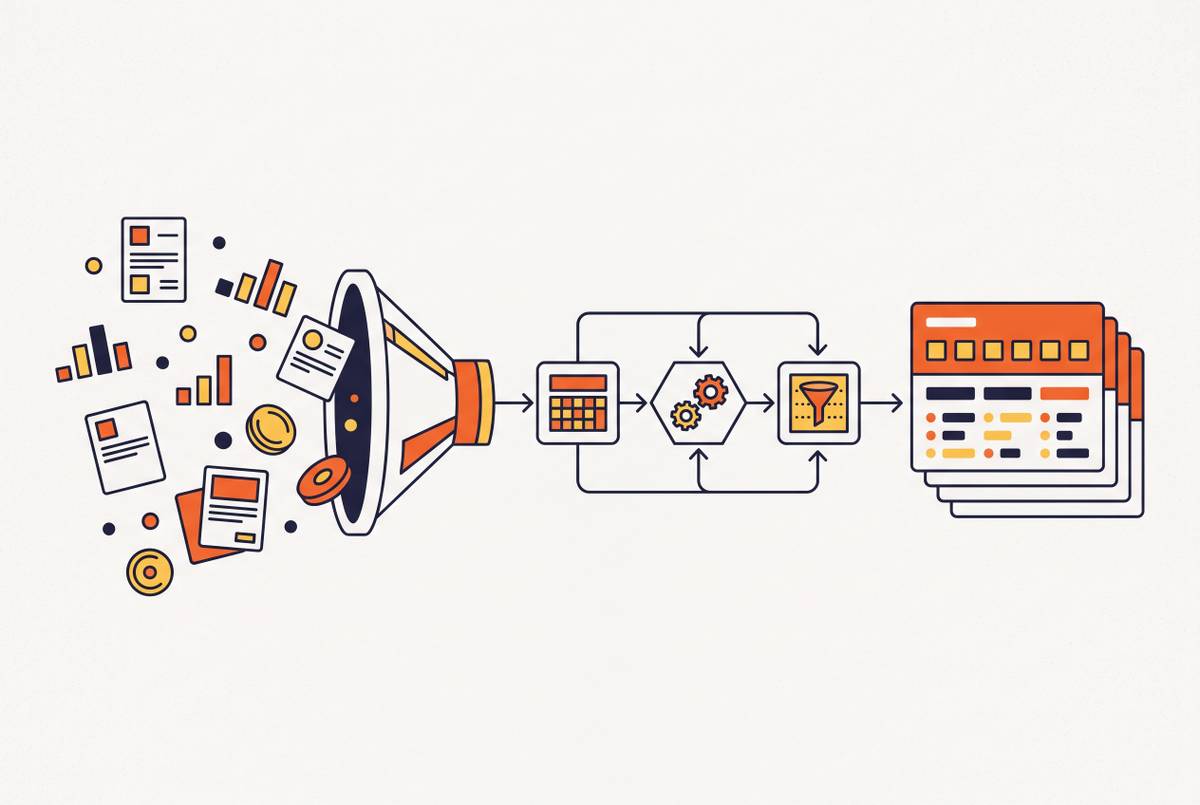
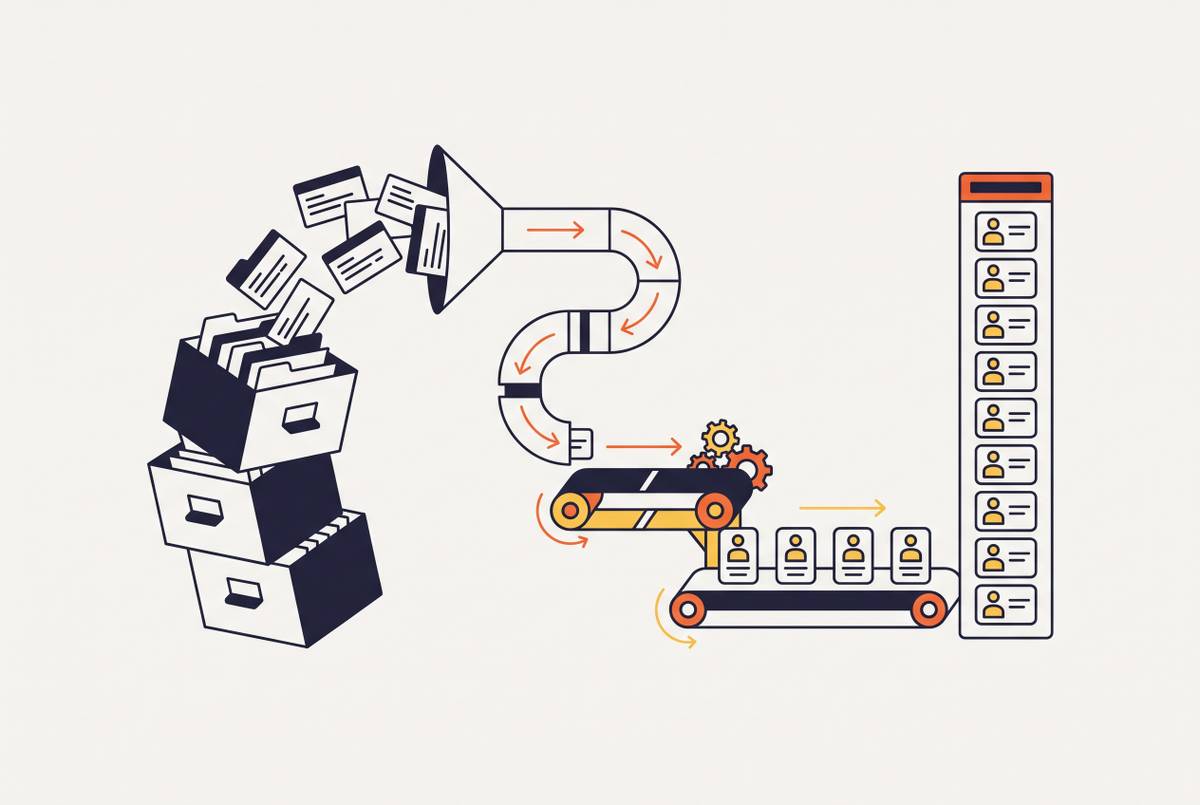
Everything in the previous three sections is only useful if the data actually makes it into a pipeline in usable form, and that's where most of the real engineering work sits. Three problems compound here: dynamic rendering, anti-bot defenses, and getting the output into a structured format a downstream system can actually use.
The surface that needs covering is wider than it first looks. G2 has a Grid page for every single category, and it refreshes quarterly, but it carries live review counts in between. There's also the Momentum Grid, which tracks which products are gaining fastest inside a category. There's the G2 Index, split across four separate report types (Usability, Implementation, Relationship, Results), each its own URL. There are size-segment and region-sliced versions of every Grid, each a page of its own. On top of that sit Capterra's Best Software category pages, which run their own separate taxonomy and cadence, plus the GetApp and Software Advice category pages, and these still list separately even though they now draw from the same GDM review pool.
Getting that data out cleanly starts with handling how the pages load. G2 and Capterra build their leaderboard rankings with JavaScript, so a scraper that just fetches raw HTML without executing that JavaScript comes back with incomplete or empty results. Anything built to monitor these pages needs to render the page the way a browser would, not just read the document source.
Then there's the defense layer. Anti-bot systems keep improving, and each improvement raises the cost of maintaining a scraper you built in-house. Managed scraping services that handle browser fingerprinting, IP rotation, and JavaScript rendering cut down that maintenance burden considerably, making continuous, between-quarter monitoring operationally realistic.
Getting past the page is only half the job. If a Grid page gives you raw HTML, an LLM, a CRM integration, or a sales alert system can't use it directly. The minimum useful output is a clean, structured representation, Markdown or JSON, that captures quadrant position, badge type, review count, and category name as distinct fields. For pipelines feeding AI or ML systems downstream, NDJSON or JSONL with schema-on-write enforcement is the right format, tagged with provenance: the source URL, the scrape timestamp, and which report quarter the data belongs to.
That provenance tagging matters more for G2 and Capterra data than it might for other scraped sources. A rank position with no timestamp and no report-quarter label is indistinguishable from a stale scrape taken somewhere in the gap between quarterly refreshes. Recording exactly when a snapshot was taken, and which report cycle it maps to, is what lets a pipeline tell a fresh signal from an outdated one.
The monitoring calendar itself needs four layers running at once. A post-release snapshot should fire shortly after each quarterly announcement, roughly mid-March, late May, late August, and late November for Winter. Between those drops, weekly or biweekly scrapes of the target category pages catch review velocity changes and new entrants before they turn into an official badge change. A separate category-creation watch tracks G2's new category announcements and taxonomy parent pages, because that signal arrives before any Grid exists. And through at least November 2026, while the G2/GDM integration is still in motion, a taxonomy change watch needs to flag when monitored URLs or category structures shift without warning, because the pipeline needs to catch structural change, not just content change.
Put those four layers together and the leaderboard stops being a quarterly PDF to skim. It becomes a live input, timestamped, structured, and tied to a specific report cycle, feeding straight into the systems that decide who a sales team calls next.