What Real-Time Web Data Delivery Actually Requires From a Scraping API in Production AI Stacks
Production AI needs scraping APIs that handle fetching, formatting, and scale together.

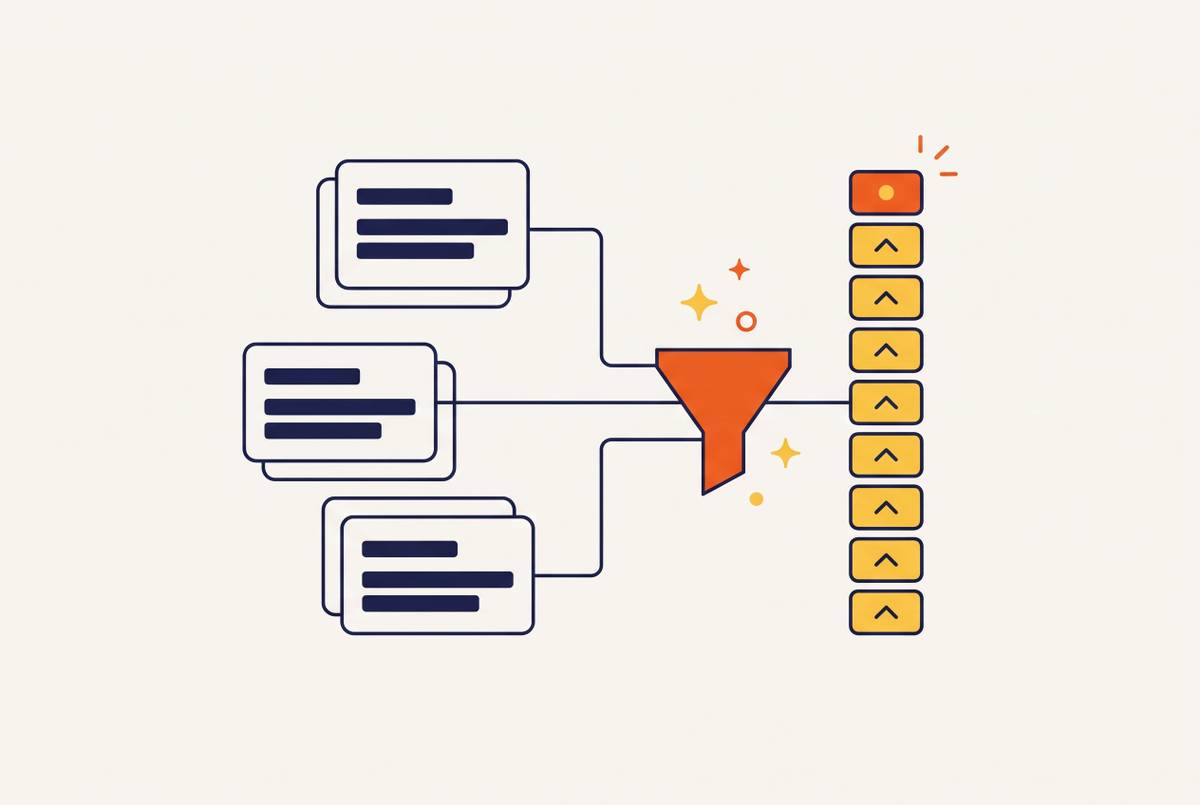
An event-driven web scraping API with webhook support needs change detection for recurring monitoring, asynchronous jobs, and callbacks when data is ready to eliminate the need for polling. A webhook alone does not detect webpage changes. For production AI stacks, reliable real-time delivery depends on three layers working together, namely fetch/unblock, format/structure, and scale/reliability.
Why production AI stacks need to think about web data delivery in layers
“Which scraping API is best?” starts the discussion in the wrong place. Identify which layer is failing. Fetch/unblock controls whether the page arrives, format/structure controls whether the AI can use it, and scale/reliability controls whether delivery holds up under a real workload. Each has distinct failure modes and cost drivers, so strength in one cannot compensate for weakness in another.
Demos rarely stress all three layers at once. A tool can fetch a convenient page, return tidy text, and look excellent without facing protected targets or concurrent demand. Production agents are less forgiving because their reasoning loops wait on external I/O. A slow response or failure can delay one record in a batch or stall a production agent’s whole chain.
Layer one: fetching the page when the web is actively trying to stop you
The fetch layer is the first hard gate. An LLM cannot extract a price from a page that never arrived, and a parser cannot turn a CAPTCHA into product documentation. Anti-bot systems including Cloudflare, DataDome, Akamai, Kasada, and HUMAN Security, formerly PerimeterX, can return 403s, 429s, JavaScript verification loops, or challenge pages. JavaScript-heavy single-page applications can also return an empty shell unless a browser renders the content. Both paths leave the pipeline without the page it needs.
The obstacle is not always the IP address. Sites can fingerprint headless browsers through TLS signatures, header order, and behavioral patterns, so proxy rotation alone does not cover the problem. Warning signs include errors on pages that load in a browser, challenge-page HTML where content should be, and sudden success-rate drops after a stable run. A response body is not proof of success. Sometimes it is just the bouncer handing over a note.
So a production API needs residential proxy rotation across many countries, and the provider needs to handle reputation management. It also needs real headless browsers kept in a warm pool for reuse across requests. Fingerprint and behavioral handling should sit behind a flag or parameter, while session persistence supports multi-step flows that depend on login or state. These capabilities keep browser maintenance out of application code. They also address separate obstacles rather than treating every failed fetch as a request for another proxy.
Latency belongs in this assessment from the start. If TLS negotiation, JavaScript execution, and anti-bot bypass take 15 seconds, the user has to wait along with the agent. Browser-operating agents built with frameworks such as Browser Use or Stagehand may seem like an alternative because they act through a browser. But user-like interaction is not itself evidence of reliable access to protected targets. For fetching that runs all the time or at short intervals, the tests still need to cover block rates, throughput, and per-page cost.
Layer two: turning fetched pages into something an LLM can actually use
Raw HTML includes navigation, ads, scripts, inline styles, and boilerplate that add little to the task but consume tokens wherever the page touches an LLM. That cost comes up again in embedding, agent context, and each later pass that processes the page. Noisy text also dilutes the signal used for retrieval.
Clean Markdown preserves content hierarchy while removing the surrounding clutter, making it suitable for RAG pipelines and agent context windows. Compared with raw HTML, that can mean dramatically fewer tokens and meaningfully higher retrieval accuracy. Predictable pages need a different output. Product data, pricing tables, and job listings often fit structured JSON, where prompts describe the fields or the system finds them automatically, so there are no selectors to maintain. Chunking helpers complete the handoff by splitting long pages into RAG-ready pieces without making the caller build that logic.
Cloudflare’s “Markdown for Agents” feature strips HTML to Markdown before delivery to AI systems. Infrastructure providers now treat AI-readable content as a deliverable, rather than leaving every downstream application to clean the same page. That places formatting inside the delivery contract. Shipping HTML and wishing the model good luck is not much of a contract.
“Self-healing” extraction can adapt when a field moves within a page, but it cannot repair a fetch that returned no content. Even after a successful fetch, an LLM can produce structurally valid JSON with a confabulated field or the wrong price tier. With enough records, even a low error rate can leave thousands of them wrong. Schema validation and volume-spike monitoring belong at this layer, while output checks must also address meaning because valid JSON can be confidently wrong.
Layer three: what scale and reliability demand from an event-driven web scraping API with webhook support
Correct fetching and formatting can still fail under load. AI workloads can demand hundreds or thousands of concurrent requests, while RAG ingestion and competitive intelligence monitoring require large URL sets processed reliably. A contract that supports only one synchronous request at a time does little to meet those workloads’ needs. Concurrency and throughput are different requirements, too. Accepting many jobs does not establish how quickly the API can finish them.
For jobs that take a long time, asynchronous delivery lets an agent move on while a slow crawl runs. Webhook callbacks notify the receiving workflow when data is ready, eliminating the need to poll for completion. Change detection has a separate job. To trigger work when a webpage changes and receive a callback, the tests need to cover recurring monitoring, meaningful-change detection, and asynchronous delivery together.
Billing also belongs in the engineering assessment. Charging for failed requests exposes the pipeline’s costs to blocking on protected targets, whereas billing only for successful requests makes that exposure easier to control. Monthly credit expiry creates another mismatch for bursty or seasonal demand. As more data is processed, per-token extraction fees can add up in a different way from flat per-page pricing. The cost of each successful result that can be used tells more than the cheapest request listed on the pricing page.
Retries and queue management should be provider responsibilities. Application-layer retries are not a substitute for infrastructure-level reliability at billions of requests, and recurring monitoring needs to distinguish meaningful content changes from every CSS edit. Enterprise volume also calls for SLA governance and dedicated support, because a silent success-rate decline can break downstream models. Spider’s 2026 benchmark found much higher static-HTML throughput from compiled architectures than from browser-per-request approaches, which shows why architecture matters here. Those differences can decide whether a large URL set gets processed in the time allowed.
How MCP and agent-native integrations change the requirements at all three layers
MCP changes the integration surface while leaving the underlying obligations intact. Its tool discovery and standardized schemas let agents call operations such as scrape, crawl, map, or search without custom glue code. The integration context includes Claude Desktop, Cursor, Cline, Windsurf, LangChain, LlamaIndex, CrewAI, and n8n. That makes web data easier to reach. It does not establish that the returned page is correct, complete, current, or relevant.
The same distinction applies to “Agent Skills,” which package a scraping service as a one-command skill for coding agents. Reduced setup friction helps teams embed live data into agent workflows, where static training datasets and cached search indexes lack current context. But an easy-to-use tool schema alone cannot help more fetches succeed or fix extraction errors. MCP support therefore needs assessment on top of the three delivery layers.
A batch pipeline may cope with a slow fetch, but an interactive agent leaves the user waiting for that same fetch. Warm browser pools and low-overhead rendering paths are thus needed both for the fetch layer and for the user’s experience. Output quality determines what the agent reasons over, and asynchronous delivery determines which longer jobs need not block it. MCP is not a fourth layer but a new execution context that stress-tests all three.
Where purpose-built data endpoints and open-source alternatives fit relative to managed APIs
Sometimes scraping is the wrong abstraction altogether. For a small number of stable, high-volume targets, purpose-built endpoints can call a site’s background APIs directly and outperform scraping on speed, cost, and reliability. They skip the browser by speaking the site’s internal protocol directly. Large e-commerce platforms, government record systems, and financial data sources can justify building or licensing such an endpoint when the volume supports it.
That advantage has a clear boundary of usefulness. A purpose-built endpoint serves a known target, while a general AI pipeline may need the changing long tail of hundreds or thousands of domains. For that workload, a managed scraping API gives the pipeline one interface it can use across different sites. The decision follows target type and volume. It is not a contest to declare one architecture the winner of the entire internet.
Open-source self-hosted scrapers occupy a third position. They offer full control and no API fee, but proxy management, browser pools, unblocking, retries, and scaling become the operator’s responsibility. FastCRW’s 2026 benchmark includes self-hostable options and checks both how easy self-hosting is and what footprint it has. That makes self-hosting a legitimate architectural choice. “Free” simply describes the API bill, with infrastructure, proxies, and engineering hours remaining the operator’s responsibility.
The practical rule is to use purpose-built endpoints when high-volume targets can be named in advance and remain stable. Managed APIs work well for the general case, the long tail, and monitoring that needs to follow targets as they change. Self-hosting leaves the same three-layer work with the team. None of these choices abolishes operational responsibility. They place it in different hands and make different assumptions about how much of the web the pipeline needs.
Applying the three-layer framework when evaluating a scraping API for a production AI stack
Run three separate assessments against each candidate API. At the fetch layer, ask whether browsers stay warm, whether anti-bot handling is abstracted behind a parameter, and whether session state survives multi-step work. Check success rates that were measured independently on hard protected targets. Then connect those results to the billing contract. Failed-request charges belong in the scale assessment, but their financial effect depends on what happens during fetching.
At the format layer, require evidence of usable output. Does the API return clean Markdown and structured JSON natively, or leave HTML parsing to the caller? Does extraction use schema validation, and can the output be checked for quality before records go into a vector store or agent context window? Chunking helpers should also be assessed against the RAG workload.
At the scale layer, test the contract against bursty concurrency, large batches, and recurring monitoring. For event-driven delivery, ask separately about meaningful-change alerts, asynchronous jobs, and webhook callbacks when results are ready. This prevents a webhook checkbox from standing in for an entire monitoring workflow. Examine credit expiry, extraction billing, provider-managed retries, SLA governance, and support under the same workload assumptions. A batch-friendly plan is not automatically an agent-friendly one.
The final criterion is how much operational surface remains with the team. Separate services for search, scraping, crawling, monitoring, and batching add coordination work, failure points, and billing complexity as volume grows. A unified platform with native Python and Node.js SDKs, MCP support, webhook delivery, and successful-request billing can reduce that burden. Integration breadth is useful only when all three layers hold up. The production-ready choice is the one that delivers usable live data reliably without making the application team become the missing infrastructure.